





















Battery Calorimeter Testing Methods for Lithium Batteries with ARC Analysis
From smartphones and electric vehicles to energy storage systems and aerospace platforms, lithium batteries are now embedded in nearly every advanced power application. As energy density continues to rise, however, battery thermal safety has become a more critical design challenge. The key questions are no longer whether batteries can fail, but how early thermal instability can be detected, how thermal runaway develops, and which testing methods generate the data needed to prevent catastrophic events.
That is why battery calorimeter testing methods have become central to modern battery R&D, validation, and safety engineering. In particular, ARC-based adiabatic calorimetry is widely used to characterize self-heating behavior, thermal runaway onset, abuse response, and heat-generation performance under conditions that closely approximate a worst-case thermal environment. ARC-based adiabatic calorimetry is widely recognized as a core technique for thermal abuse testing and safety analysis, while also supporting heat capacity measurement and cycling-related evaluation.
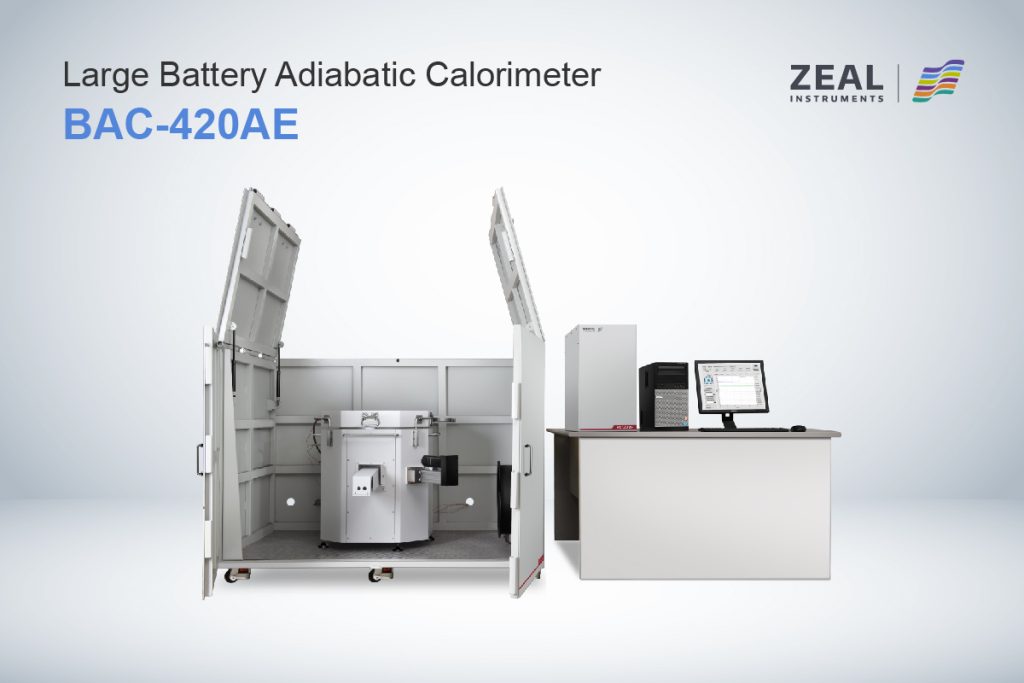
Unlike general-purpose thermal analysis tools, a battery calorimeter is purpose-built for electrochemical cells and battery assemblies. Modern systems are used not only for thermal runaway characterization, but also for specific heat capacity measurement, charge-discharge heat generation testing, gas and pressure analysis in sealed conditions, and abuse testing such as nail penetration or crush. Industry sources also show that calorimetry is increasingly used across the battery workflow, from materials screening to cell-level validation and larger-format safety assessment.
What Is a Battery Calorimeter?
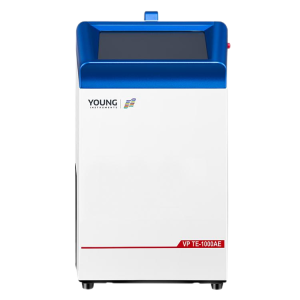
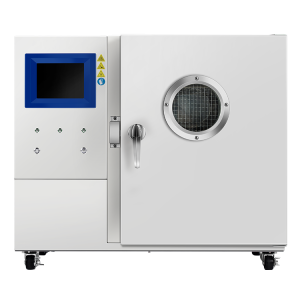
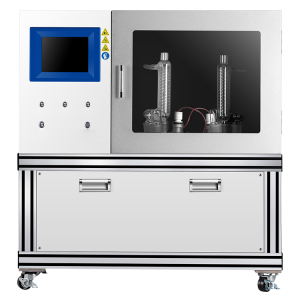
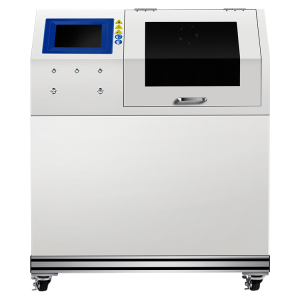
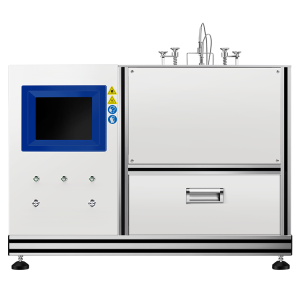
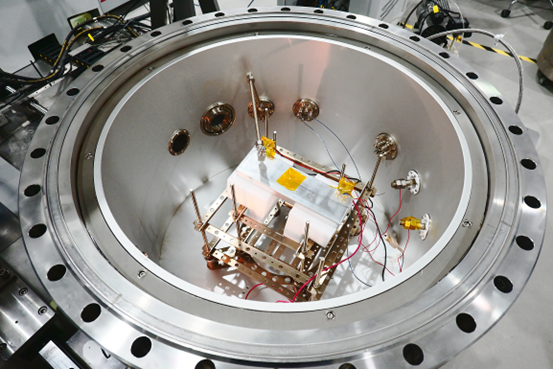
A battery calorimeter is a thermal analysis system designed to measure how a battery generates, stores, and releases heat. In ARC-based systems, the instrument closely tracks the sample temperature to minimize heat exchange with the surroundings, creating a near-adiabatic environment in which exothermic reactions can be observed with high sensitivity. This is why ARC is routinely used to study thermal stability, self-heating, decomposition behavior, and runaway response in batteries and energetic materials.
What makes modern battery calorimeters especially valuable is their range. They are no longer limited to small laboratory cells. Current commercial and application-focused sources describe battery calorimetry platforms that support abuse testing, life-cycle or cycling-related evaluation, heat-capacity work, and multiple battery formats, while recent literature also points to growing interest in extending calorimetry to faster safety screening and larger practical use cases.
Why Battery Calorimeter Testing Methods Matter
The main advantage of battery calorimeter testing methods is their ability to capture internal heat generation and self-heating behavior under controlled conditions—something conventional heating tests or environmental chambers cannot achieve. In practical battery safety evaluation, no single method is sufficient on its own, so calorimetry is widely used alongside other techniques to define safe operating limits and understand failure mechanisms. ARC-based systems are especially valuable because they track the battery’s temperature in real time, allowing direct observation of self-heating onset, heat accumulation, and thermal runaway development under near-adiabatic conditions.
In practice, these methods help engineers answer questions such as:
- At what temperature does self-heating begin?
- How rapidly does the cell temperature rise once decomposition starts?
- How much heat is released during failure or during normal cycling?
- How much gas is produced, and how quickly does pressure increase in sealed testing?
- How should battery packs, venting paths, and thermal management systems be designed to reduce propagation risk?
Those outputs are valuable not only for research but also for pack safety design, test planning, and model development. Published research continues to emphasize that accurate measurement of heat release and thermal runaway variability is essential for safer battery systems and earlier-stage material or cell screening.
HWS Mode: The Core Mechanism Behind Adiabatic Testing
A defining feature of many ARC-based battery calorimeter testing methods is the Heat-Wait-Search (HWS) procedure. In this method, the system heats the sample to a set point, waits for thermal equilibration, and then monitors for exothermic activity by detecting self-heating behavior. Once self-heating is detected, the instrument follows the sample temperature to maintain near-adiabatic conditions.
This approach is slower than a continuous temperature ramp, but it provides significantly more reliable data for safety analysis. Instead of forcing the battery through a fixed heating profile, HWS enables the system to pause, detect early-stage exothermic reactions, and track how they evolve over time. This makes it particularly effective for identifying:
- self-heating onset temperature
- maximum temperature during thermal runaway
- adiabatic temperature rise
- self-heating rate
- transition from stable behavior to accelerating decomposition
This level of sensitivity is why ARC-based methods are widely regarded as a benchmark approach for battery abuse testing and thermal runaway analysis.
Two Technical Routes: Open and Sealed Testing Environments
One of the most practical ways to understand battery calorimeter testing methods is to separate them into two broad configurations: open testing and sealed testing.
Open Testing for Direct Thermal Characterization
In open testing, the battery cell is typically mounted in the calorimeter chamber without a sealed pressure vessel around it. This configuration reduces interference from extra containment hardware and is often preferred when the main goal is to measure the cell’s thermal response as directly as possible. Open HWS methods are commonly used to observe self-heating behavior, the onset of runaway, and overall adiabatic temperature development.
Open configurations are especially useful when the priority is:
- high-fidelity thermal response measurement
- early-stage onset detection
- optical or infrared observation of visible failure behavior
- comparison of cell designs, chemistries, or states of charge under similar thermal abuse conditions
Sealed Testing for Gas, Pressure, and Hazard Evaluation
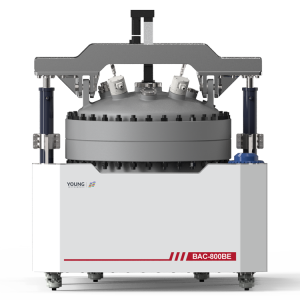
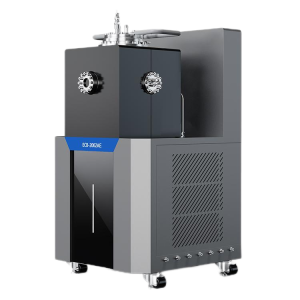
In sealed testing, the battery is placed inside a pressure-tight vessel or canister so that gases released during decomposition can be retained and analyzed indirectly through pressure. In sealed testing, the battery is placed inside a pressure-tight vessel or canister so that gases released during decomposition can be retained and analyzed through pressure and thermal signals. Under this configuration, both temperature rise and pressure evolution can be monitored simultaneously during thermal abuse, providing a more complete understanding of failure behavior. This adds a second hazard dimension beyond temperature alone and is highly relevant for pack safety, venting design, and gas-risk assessment.
Sealed battery calorimeter testing methods are more suitable when the project requires insight into:
- gas generation rate
- total gas release tendency
- pressure rise during thermal runaway
- combustible off-gas hazard assessment
- enclosure and vent-path design inputs
This distinction between open and sealed testing provides a clearer framework for selecting the appropriate method based on test objectives and safety requirements.
Advanced Battery Calorimeter Testing Methods Beyond Thermal Abuse
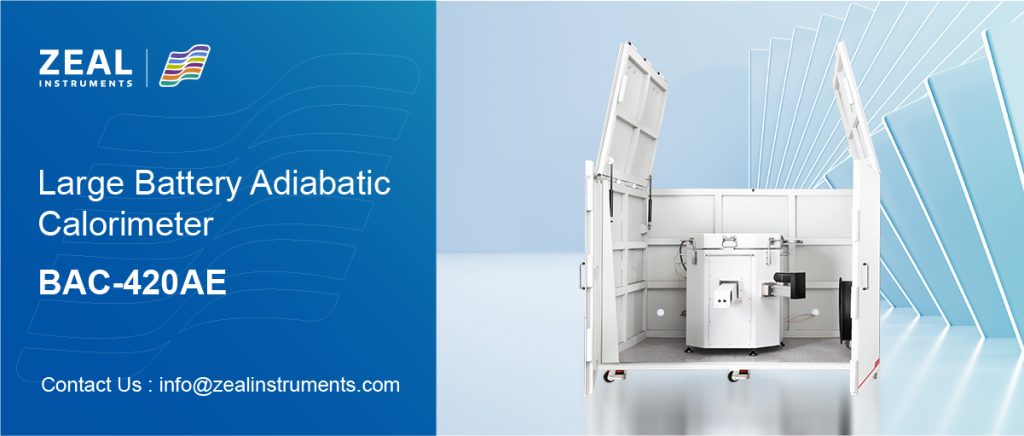
Thermal abuse testing forms the foundation, but modern battery calorimeter testing methods extend far beyond simple overheating experiments. In practice, ARC-based systems are widely used to evaluate a range of conditions, including short circuit, overvoltage, nail penetration, crush, heat capacity measurement, and heat generation during charge–discharge processes, providing a more comprehensive understanding of battery thermal behavior and safety performance.
Nail Penetration and Crush Testing
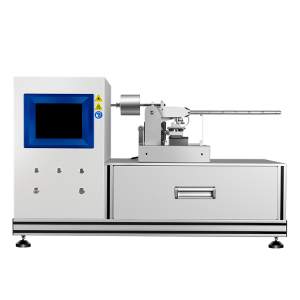
Advanced platforms can integrate nail penetration or crush modules directly into the calorimeter workflow, enabling mechanical abuse testing with synchronized thermal tracking.
This is critical because a standalone abuse test may only indicate whether failure occurs, while an integrated calorimetric approach reveals:
- how much heat is generated
- how rapidly self-heating accelerates
- whether the mechanically triggered failure progresses into full thermal runaway
This makes the resulting dataset far more valuable for root-cause analysis and battery design validation.
Specific Heat Capacity Testing
Heat capacity is a critical battery parameter because it determines how quickly the cell temperature rises under a given heat input.
ARC-based heat capacity testing calculates Cp from the temperature response under controlled heating conditions, taking into account factors such as sample mass, temperature rate, and electrical input.
In practice, specific heat capacity data support:
- electrochemical–thermal simulation
- battery thermal management system design
- transient temperature prediction
- comparison of different cell formats and chemistries
Including heat capacity analysis expands the role of calorimetry from safety evaluation to broader engineering applications.
Charge–Discharge Heat Generation Testing
Battery heat generation is not limited to failure events. During normal operation, batteries continuously generate and absorb heat due to irreversible losses and reversible electrochemical processes.
In a battery calorimeter, cycling tests can be conducted under:
- adiabatic mode, where the chamber temperature follows the battery temperature
- isothermal mode, where the chamber temperature remains constant to isolate heat flow
After heat capacity calibration, the system can directly quantify heat generation during charge and discharge with high accuracy.
This capability is essential for thermal management system (TMS) modeling and helps identify cells that may meet electrical performance requirements but exhibit unfavorable thermal behavior.
Equipment Selection: Sealed Systems vs Pressure-Relief Systems
Equipment selection is a critical part of battery calorimeter testing methods, as different system configurations are designed to address specific testing objectives.
Sealed Battery Calorimeter Systems
A sealed system is the better choice when the project must capture both temperature and gas-related hazard information. These systems are suited to:
- thermal runaway gas release analysis
- pressure-rise monitoring
- enclosure and venting studies
- module and pack hazard evaluation
- workflows that need more than temperature-only outputs
This route is often more aligned with advanced safety engineering, especially when gas toxicity, flammability, or pressure loading are part of the design question.
Pressure-Relief or Open-Type Battery Calorimeter Systems
Pressure-relief or open-type systems are more appropriate when the user wants to preserve classic ARC operation and prioritize direct thermal characterization with lower interference from a sealed vessel. These systems are often well-suited for:
- self-heating onset studies
- runaway curve tracking
- comparative cell safety testing
- heat capacity work
- visible or infrared observation
- combined abuse and thermal characterization workflows

Applications Across the Full Battery Value Chain
Battery calorimetry is not limited to thermal runaway testing, but serves as a cross-stage engineering method across the battery lifecycle.
Material-Level Screening
At the material stage, battery calorimeter testing methods can support the thermal stability assessment of:
- cathode materials
- anode materials
- separators
- electrolytes
- material combinations within a full cell
ARC-based measurements of individual components and material combinations help researchers better understand thermal stability, interaction effects, and decomposition behavior under controlled conditions, providing a reliable foundation for material selection and cell design.
Cell-Level Safety Evaluation
At the cell level, calorimetry is used to obtain parameters such as:
- onset temperature
- maximum temperature
- self-heating rate
- total temperature rise
- heat capacity
- heat generation during cycling
These data support design comparisons, state-of-charge studies, and chemistry screening. Published work and supplier resources both reinforce the importance of accurate thermal runaway and heat-release measurement at the cell level.
Module and Pack Safety Engineering
As cell size and system energy increase, the value of calorimetry expands from diagnosis to protection design. Sealed calorimetric methods can provide inputs for:
- module hazard assessment
- gas-release risk analysis
- propagation mitigation strategy
- vent and enclosure design
- pack-level safety architecture
This is especially relevant as battery systems move toward larger formats and higher energy density, a trend reflected in both commercial testing resources and current safety literature.
Thermal Management Optimization
Heat generation data from cycling and adiabatic response studies can be directly applied to thermal management system development. In battery engineering, thermal modelling plays a critical role in understanding performance, efficiency, and long-term degradation. Calorimetry-based data not only supports thermal abuse analysis but also provides valuable insights into heat generation behavior during operation, enabling more accurate simulation, improved system design, and better lifecycle performance evaluation.
What Makes a Strong Battery Calorimeter Testing Program?
A strong testing program is not defined by one test alone. The most useful battery calorimeter workflow combines the right configuration, the right trigger, and the right data outputs for the development stage.
A robust program typically considers:
- battery format and size
- state of charge
- open vs sealed environment
- abuse trigger type: thermal, electrical, or mechanical
- whether heat capacity is needed
- whether charge-discharge thermal behavior is needed
- whether gas and pressure data are required
This approach provides a clearer framework for selecting appropriate testing methods based on specific engineering objectives.
Conclusion
As battery energy density continues to climb, thermal safety can no longer be treated as a late-stage validation issue. It must be built into material screening, cell design, module engineering, and pack protection strategy from the start. That is why battery calorimeter testing methods remain one of the most important tools in modern battery development.
A well-designed battery calorimeter program does more than identify when a cell fails. It reveals how self-heating begins, how thermal runaway develops, how much heat is released, how gas and pressure evolve, and how normal cycling contributes to thermal load. From open adiabatic characterization to sealed hazard analysis, and from heat capacity to charge-discharge heat generation, these methods provide the data needed to quantify risk, optimize design, and build safer battery systems.
If your goal is to evaluate new chemistries, validate larger-format cells, analyze gas-release hazards, or improve thermal management models, ARC-based battery calorimetry offers a practical and technically rigorous path forward.


