





















Application of Battery Accelerating Rate Calorimeter in Battery Thermal Runaway Test
For battery R&D engineers, preventing thermal runaway propagation in battery pack design and understanding the thermal stability and failure boundaries of cells are core challenges to ensure the safety of electric vehicles and energy storage systems. The battery thermal runaway test is the key method to address this issue, and the Battery Accelerating Rate Calorimeter (ARC) is the essential equipment for conducting such tests.
This article systematically introduces the working principle, testing modes, key measurement parameters, and practical applications of the battery accelerating rate calorimeter, helping engineers quickly master the methodology of thermal runaway testing and providing data support for thermal management system design.
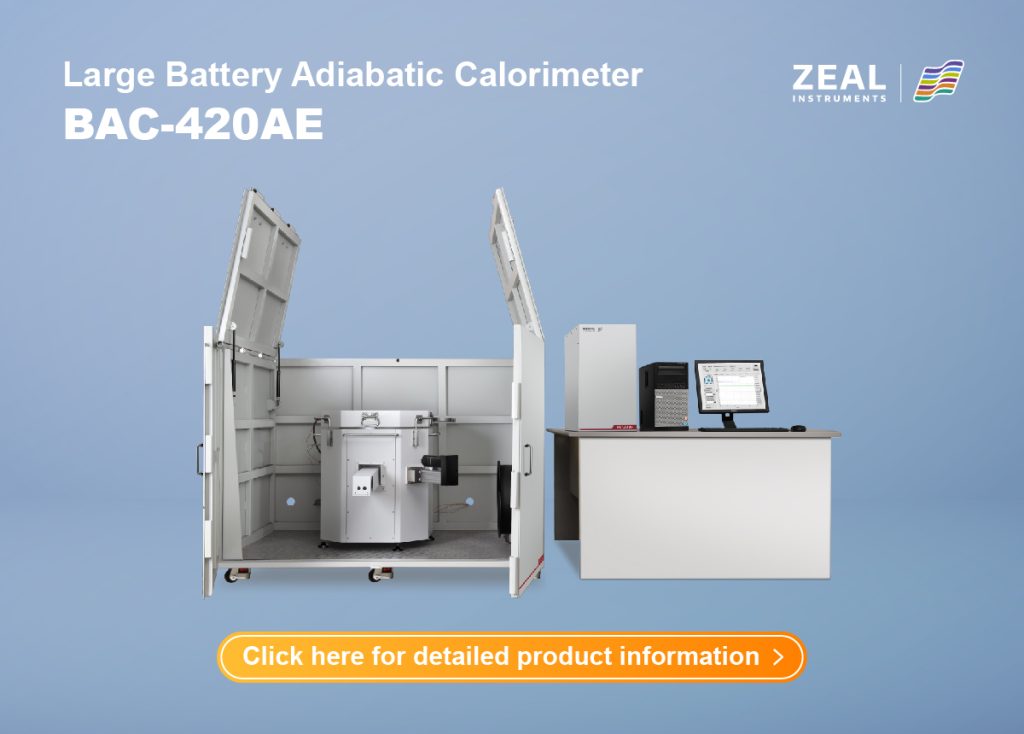
What is a Battery Accelerating Rate Calorimeter?
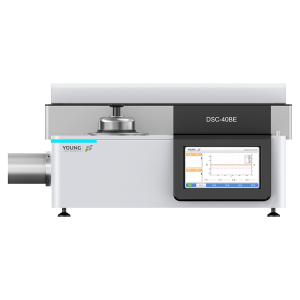
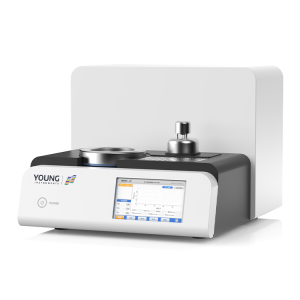
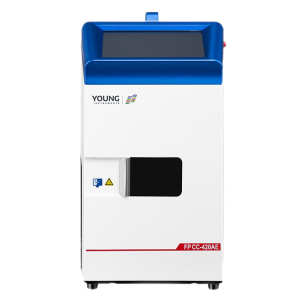
A battery accelerating rate calorimeter is a specialized calorimetric device used to study the thermal runaway and propagation mechanisms of cells (prismatic, pouch, etc.) and small modules. Its core features include:
- Dynamic adiabatic control: The instrument adjusts the calorimeter chamber temperature in real time according to the battery’s own temperature changes, maintaining zero temperature difference between the cell and chamber, thereby simulating the true thermal behavior of the battery in an adiabatic environment.
- Multi-functional testing modes: Supports thermal runaway tests, adiabatic temperature rise tests, charge/discharge heat generation tests, and specific heat capacity tests.
- High-precision parameter acquisition: Accurately measures self-heating onset temperature (T₁), thermal runaway onset temperature (T₂), peak thermal runaway temperature (T₃), maximum runaway rate, gas generation volume, and rate.
- Extended analytical capability: Can be coupled with GC, FTIR, or MS to analyze gas composition during thermal runaway, providing a complete evidence chain for safety evaluation.
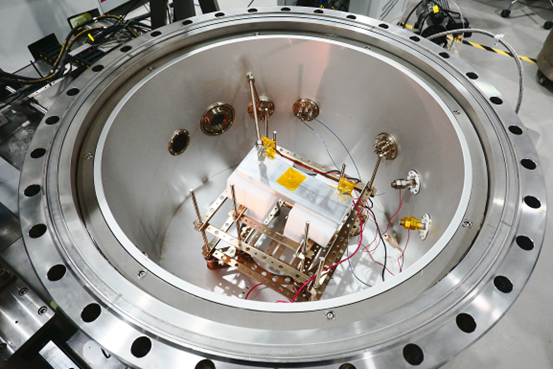
Main Objectives of Battery Thermal Runaway Test
1. Operating Condition Simulation
Thermal runaway is typically triggered by thermal abuse, electrical abuse, or mechanical abuse. The calorimeter can simulate these scenarios:
- Thermal abuse: Using HWS (Heat–Wait–Search) mode to simulate high-temperature environments.
- Electrical abuse: Simulating overcharge, short circuit, or extreme electrical conditions.
- Mechanical abuse: Needle penetration or compression to replicate physical damage scenarios.
2. Key Measurement Indicators
Through thermal runaway testing, engineers can obtain critical parameters such as:
Temperature characteristics: T₁ (Tonset), T₂ (TTR), T₃ (peak runaway temperature).
Heat generation characteristics: Adiabatic temperature rise ΔTad = T₃ – T₁, peak heat generation rate (dT/dt)max.
Energy and mass characteristics: Thermal runaway energy (Q), cumulative heat release before runaway.
Mass loss rate: Derived from pre- and post-test mass difference, correlating with gas release and material decomposition.
3. Three Core Testing Modes
- Adiabatic thermal runaway test – Simulates abnormal conditions such as overcharge or short circuit to evaluate thermal safety.
- Specific heat capacity test – Establishes specific heat capacity curves versus temperature, essential for accurate heat power calculations in subsequent tests.
- Adiabatic temperature rise test – Assesses cell behavior under no-heat-dissipation conditions, providing risk-level data for severe operating scenarios.
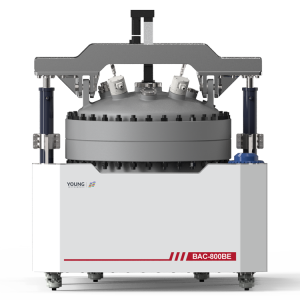
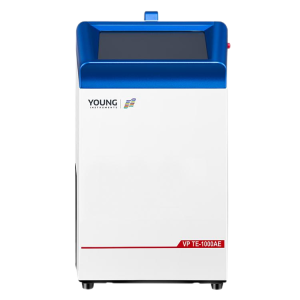
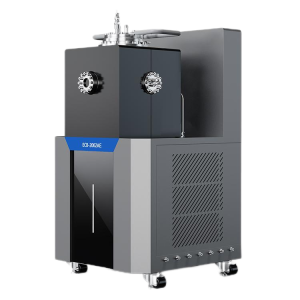
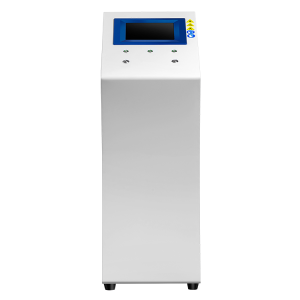
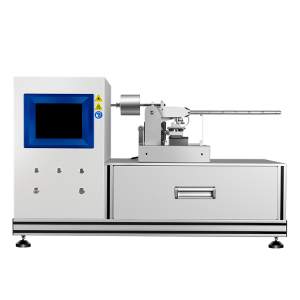
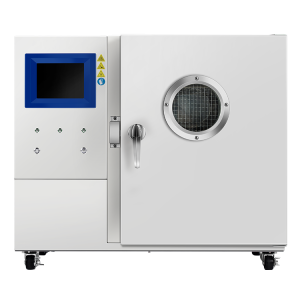
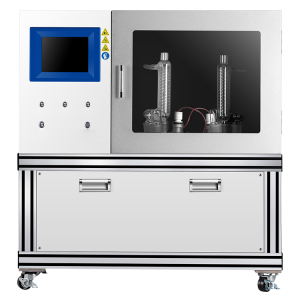
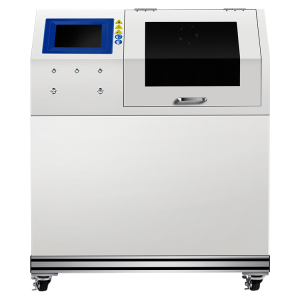
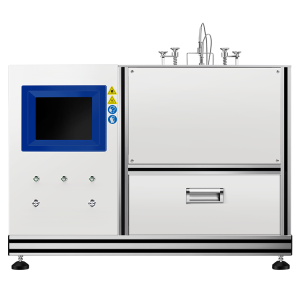
Product Recommendation: BAC Series Large Battery Adiabatic Rate Calorimeters
The BAC series is designed to meet the growing demand for testing large-format cells and small modules. Key advantages include:
- Ultra-large capacity: Supports single cells or modules up to 1600 mm in length.
- Superior explosion resistance: Withstands high-pressure shocks during runaway events, ensuring lab safety.
- Integrated thermal runaway–gas analysis: Simultaneously captures runaway curves and gas data in one experiment.
- Flexible modular expansion: Optional charge/discharge, penetration, and video modules.
- High efficiency and precision: Optimized temperature control algorithms and sensor layout improve test repeatability and speed.
Conclusion
The battery thermal runaway test is indispensable in battery safety R&D, and the battery accelerating rate calorimeter is the core instrument for executing it. By precisely measuring T₁, T₂, T₃, ΔTad, and (dT/dt)max, engineers can scientifically evaluate cell thermal stability, guide thermal management system design, and comply with standards such as UL 9540A and GB/T 36276.
If you are selecting equipment or optimizing your thermal runaway testing strategy, feel free to contact us for more technical information and product demonstrations.


