





















SADT Test Apparatus for Organic Peroxide Safety Storage, Transport and UN Compliance Testing
Organic peroxides and self-reactive substances are subject to strict thermal safety requirements during transportation and storage. Under the UN Recommendations on the Transport of Dangerous Goods, IMDG Code, ADR, GHS and CLP, the Self-Accelerating Decomposition Temperature, or SADT, is a mandatory classification parameter.
Without accurate SADT data, companies cannot determine whether temperature-controlled transport is required, set safe warehouse temperature limits, or prepare compliant SDS and transport documentation. The core tool for obtaining reliable SADT data is a SADT Test Apparatus that follows UN standard test principles.
What Is SADT? A Packaging-Environment Coupled Safety Parameter
SADT stands for Self-Accelerating Decomposition Temperature. It refers to the lowest ambient temperature at which a substance may undergo self-accelerating decomposition under defined test conditions, specific packaging size, and actual storage or transport conditions.
The key understanding is that SADT is not simply an intrinsic material property.
- The same formulation may show a significantly different SADT value in a 50 mL sample bottle and a 200 L transport drum.
- SADT is the combined result of ambient temperature, decomposition kinetics, packaging size and heat transfer characteristics.
- SADT is a key basis for defining the Control Temperature and Emergency Temperature during storage and transport.
For companies handling organic peroxides or self-reactive substances, SADT testing is not only a laboratory procedure. It is a direct foundation for safe packaging selection, transport classification and warehouse temperature control.
UN Recommended SADT Test Methods: Why Is the Adiabatic Storage Test an Efficient Laboratory Solution?
Section 28 of Part II of the UN Manual of Tests and Criteria recommends four methods for determining SADT.
| Method | Name | Principle | Sample Quantity | Test Period | Typical Application |
|---|---|---|---|---|---|
| H.1 | US SADT Test | Isothermal oven test using commercial packaging | 400 g to 220 L | 7 days | Final validation, high cost and higher hazard level |
| H.2 | Adiabatic Storage Test | Dewar flask adiabatic storage method | About 1.1 L | 24 h per temperature step | Laboratory screening and packaging extrapolation |
| H.3 | Isothermal Storage Test | Isothermal calorimetry using an aluminum block heat sink | About 20 g | Equilibrium at each temperature point | Kinetic study with very small sample quantity |
| H.4 | Heat Accumulation Storage Test | Dewar heat accumulation test, also known as BAM-Dewar | About 400 mL | 7 days | Packaging heat loss simulation, temperature rise ≥6 K as criterion |
Method Selection Logic
H.1 is the closest to real commercial packaging conditions, but it has a long test period, high cost and higher safety risk. Therefore, it is usually used only for final regulatory validation.
H.4 is a commonly used simulation method, but its fixed 7-day period may be inefficient for formulation screening.
H.2, also known as the Adiabatic Storage Test, uses a Dewar flask to monitor self-heating under near-adiabatic conditions. A single temperature point can be evaluated within a 24-hour temperature step. When combined with packaging heat loss models, the data can be extrapolated to real commercial packaging sizes.
Because of its laboratory safety, flexible test cycle and strong extrapolation capability, H.2 is often an efficient tool for formulation development and packaging selection.
A SADT Test Apparatus based on UN Test H.2 principles can support both testing efficiency and regulatory compliance.
Key Factors Affecting SADT: Why Professional Testing Equipment Is Required
SADT is strongly affected by formulation and packaging conditions. Relying only on literature data or experience-based estimation can create serious safety risks.
1. Packaging Size and Geometry
As packaging volume increases, the heat dissipation surface area-to-volume ratio decreases. Heat dissipation becomes less efficient, which can significantly lower the SADT.
2. Concentration and Dilution System
Higher active oxygen content usually leads to a lower SADT. The use of high-boiling inert diluents, such as phthalate-based diluents, may reduce sensitivity and increase SADT.
3. Water Content
Aqueous formulations generally have higher SADT values than anhydrous products because water provides thermal inertia and heat absorption.
4. Impurity Sensitivity
Metal ions, acids, bases or organic impurities may significantly reduce thermal stability and may even trigger violent decomposition.
These variables make SADT a complex safety parameter. Companies should not rely only on published data or empirical judgment. Instead, they should use a standardized SADT Test Apparatus to obtain measured laboratory data.
SADT Test Apparatus Product Overview
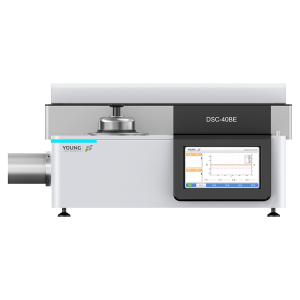
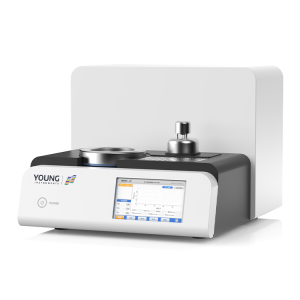
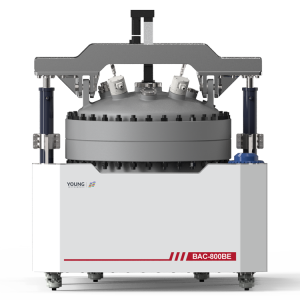
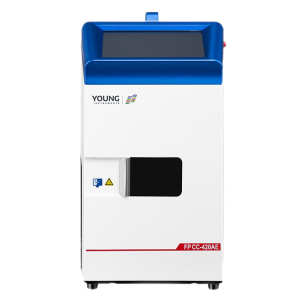
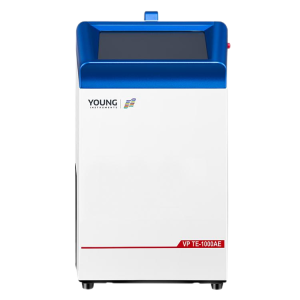
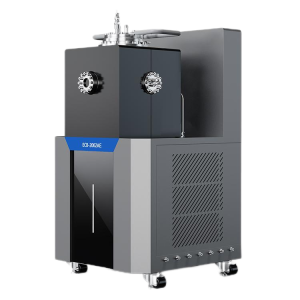
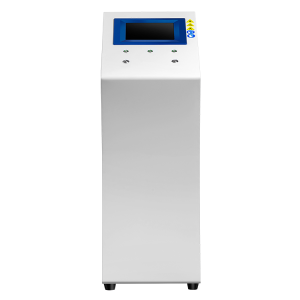
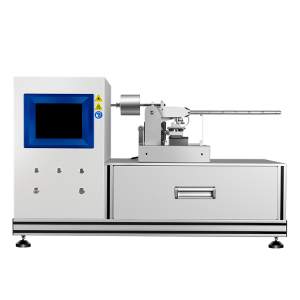
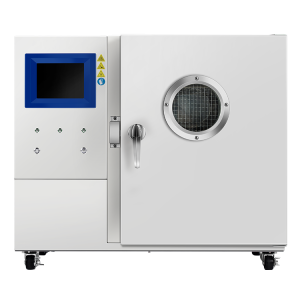
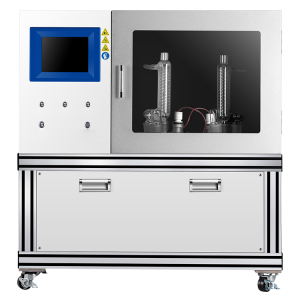
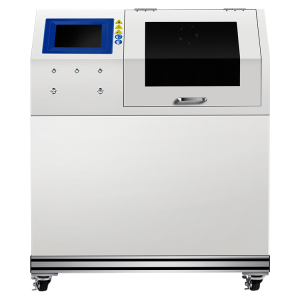
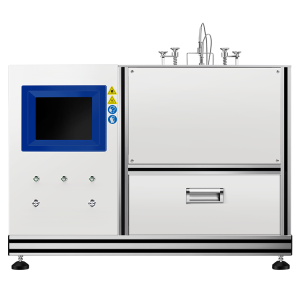
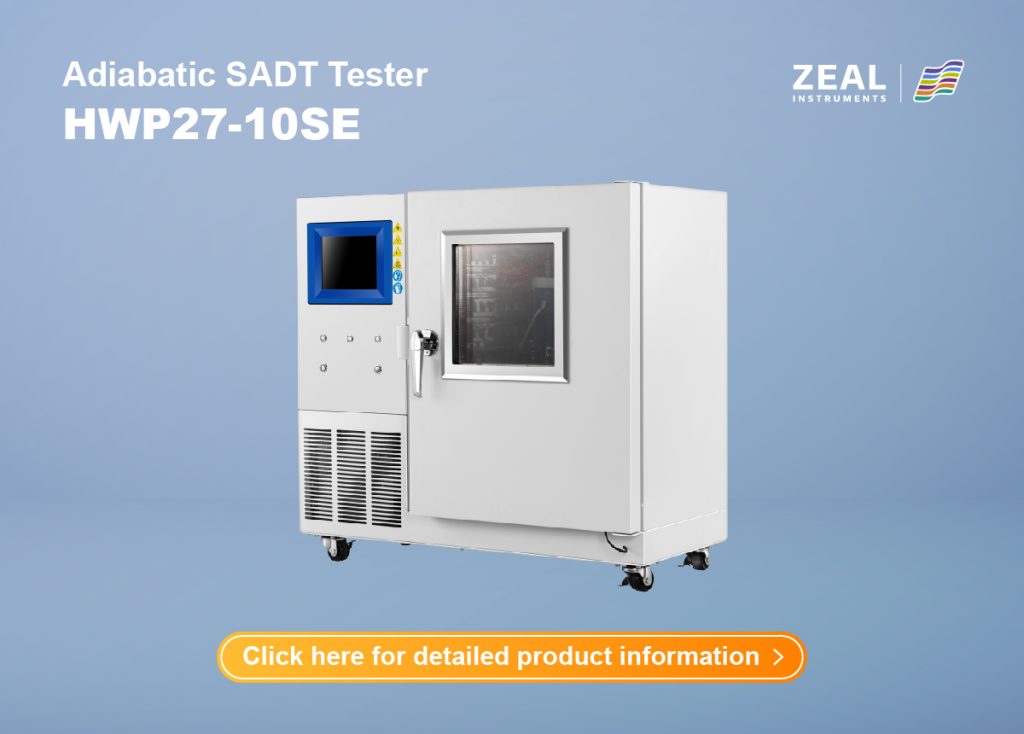
This SADT Test Apparatus is based on the principle of UN Test H.2, the Adiabatic Storage Test. It uses Dewar flask adiabatic storage and stepwise isothermal testing to efficiently obtain SADT data under laboratory conditions. The test results can also support extrapolation to real commercial packaging.
| Parameter | Specification |
| Operating Environment | -5–45 °C, <95% RH |
| Chamber Temperature Control Range | -20–220 °C |
| Temperature Control Accuracy | ±1 °C |
| Sample Temperature Measurement Range | -50–500 °C |
| Sample Temperature Measurement Precision | ±1.5 °C or ≤±0.004|t| °C |
| Sample Temperature Measurement Resolution | 0.1 °C |
| Sample Temperature Measurement Accuracy | ±(2.5 or 0.0075|t|) °C |
| Dewar Flask Capacity | 1 L |
| Dewar System Heat Loss Rate | ≤10 mW |
| Constant Power Adjustment Range | 0.1–2 W |
| Constant Power Accuracy | ≤0.015 W |
| Temperature Rise Rate Range | 0–2 °C/min |
| Coolant Circulation Flow Rate | ≥3 L/min |
| Dewar Flask Material | Glass inner vessel, metal outer casing with blue coating |
| Instrument Dimensions (L × W × H) | 930 mm × 545 mm × 875 mm |

Application Scenarios and User Value
1. Organic Peroxide Manufacturers
For organic peroxide manufacturers, thermal stability evaluation of new formulations or dilution systems is a core task for R&D and compliance departments. Different packaging formats, such as drums, IBCs and tanks, require clear safety temperature boundaries.
Using a SADT Test Apparatus for laboratory screening helps companies identify suitable formulation and packaging options at an early development stage, without launching expensive H.1 full-package validation tests every time. This can reduce both R&D cost and development cycle.
2. Third-Party Testing Laboratories
For third-party laboratories, issuing SADT test reports that support UN, ADR and IMDG compliance is an important service capability.
A SADT Test Apparatus based on UN Test H.2 principles can provide regulatory-oriented test data and support extrapolation or comparison with H.1 results. This helps improve the authority of laboratory reports and supports customer compliance review.
3. Chemical Logistics and Warehousing Companies
Warehouse temperature limits, transport cold-chain settings and seasonal high-temperature emergency plans all depend on accurate SADT data.
A SADT Test Apparatus helps companies set Control Temperature and Emergency Temperature based on measured data. This can help avoid unnecessary energy consumption from excessive cooling, while also reducing the safety risk caused by insufficient temperature control.
4. Process Safety Consulting and PSM Services
Reaction hazard assessment, HAZOP support and SDS preparation all require accurate SADT data as a basic input.
A SADT Test Apparatus provides packaging-level measured data, helping bridge the gap between milligram-scale calorimetry data and ton-scale storage and transport safety assessment.
5. Core Value Summary
Compliance Value: Supports mandatory testing requirements for organic peroxides and self-reactive substances under UN, IMDG Code, ADR, GHS and CLP frameworks.
Economic Value: Reduces the number of H.1 full-package tests, lowers R&D and compliance costs, and helps avoid unnecessary investment in over-designed temperature-controlled transport.
Safety Value: Identifies thermal runaway risk at the laboratory stage and helps prevent fire or explosion accidents during production, storage and transport.
Conclusion
SADT is a core regulatory safety parameter for the storage and transport of organic peroxides and self-reactive substances.
UN Test H.2, the Adiabatic Storage Test, uses Dewar flask adiabatic tracking to achieve a practical balance between laboratory safety, testing efficiency and packaging extrapolation.
A professional SADT Test Apparatus is the dedicated equipment for carrying out H.2 testing and obtaining reliable SADT data for chemical safety, packaging selection and dangerous goods compliance.


