





















What Is the BAM Friction Test? Procedure, Equipment and Results
The BAM friction test is a standardized laboratory method used to evaluate the mechanical friction sensitivity of energetic materials. It determines whether a small specimen reacts when subjected to controlled friction between a porcelain peg and plate under a defined normal load.
The method is commonly applied to primary explosives, high explosives, propellants, pyrotechnic compositions and other energetic substances whose response to mechanical stimulation must be understood before handling, processing, storage or transport decisions are made.
This guide explains the BAM friction test principle, apparatus components, general procedure, reaction categories, limiting-load interpretation and the main factors laboratories should consider when selecting a BAM friction sensitivity tester.
BAM Friction Test at a Glance
| Test method | UN Manual of Tests and Criteria, Test 3(b)(i) |
| Mechanical stimulus | Sliding friction under a defined normal load |
| Contact surfaces | Porcelain peg and porcelain plate |
| Main UN load sequence | 5, 10, 20, 40, 60, 80, 120, 240 and 360 N |
| Plate movement | One 10 mm back-and-forth movement beneath the peg |
| Reaction categories | No reaction, decomposition or explosion |
| Limiting load | The lowest tested load at which at least one explosion occurs in the prescribed trials |
| UN classification criterion | A limiting load below 80 N is considered a positive result under Test 3(b)(i) |
The values above summarize key features of the UN method. They must not be treated as standalone operating instructions or universal safe handling limits.
Table of Contents
- What Is the BAM Friction Test?
- Why Friction Sensitivity Matters
- BAM Friction Test Principle
- Main Components of a BAM Friction Apparatus
- General BAM Friction Test Procedure
- Reaction Categories and Result Interpretation
- Factors That Affect Test Results
- Relevant BAM Friction Test Standards
- Traditional vs. Automated BAM Testers
- Friction vs. Impact Sensitivity Testing
- How to Select a BAM Friction Tester
- Frequently Asked Questions
What Is the BAM Friction Test?
The BAM friction test is a mechanical sensitivity test in which a small specimen is placed between defined porcelain contact surfaces and exposed to sliding movement under an applied normal force.
BAM refers to the German Federal Institute for Materials Research and Testing, known in German as the Bundesanstalt für Materialforschung und -prüfung. The BAM friction apparatus has become a widely recognized configuration for evaluating the response of energetic substances to friction.
The method is included in the UN Manual of Tests and Criteria as Test 3(b)(i). It may be used within a broader classification program to determine whether a substance is too sensitive to friction in the physical form in which it is tested.
The test does not reproduce every friction condition that could occur during manufacturing, transport or use. Instead, it creates a standardized laboratory stimulus that supports classification, formulation comparison and controlled investigation of material behavior.
A BAM friction result is therefore method-specific. It should not be interpreted as a direct prediction of how a material will behave in every industrial process.
Why Friction Sensitivity Matters
Energetic materials may encounter mechanical friction during mixing, grinding, pressing, filling, conveying, sampling, packaging and equipment cleaning. Friction can also occur when particles become trapped between moving surfaces or when hard contaminants enter processing equipment.
The probability and severity of a reaction can be influenced by:
- Material composition and formulation
- Particle size, morphology and crystal condition
- Moisture, solvent or plasticizer content
- Sample homogeneity and preparation history
- Temperature and environmental conditions
- Applied load and relative movement
- Condition of the contacting surfaces
- Confinement and equipment geometry
- Contamination by sand, metal or other hard particles
Friction sensitivity data can help laboratories compare formulations, investigate abnormal material behavior and determine whether further process-safety evaluation or handling controls are necessary.
Mechanical sensitivity cannot be characterized by a friction test alone. BAM friction results are commonly considered together with impact sensitivity testing, thermal stability tests and other physical hazard evaluations relevant to the material and intended process.
BAM Friction Test Principle
In the BAM friction apparatus, the test specimen is placed on a porcelain plate beneath a stationary porcelain peg. A selected force is applied through the peg, and the plate is moved horizontally beneath it.
The UN method specifies one 10 mm back-and-forth movement of the plate. This arrangement exposes the specimen to a controlled combination of:
- Normal force applied through the porcelain peg
- Relative lateral movement between the plate and peg
- Localized friction and mechanical stress within the specimen
The main load sequence identified by the UN method is 5, 10, 20, 40, 60, 80, 120, 240 and 360 N. Intermediate loads may be used when required by the selected method and test objective.
The laboratory observes each trial and classifies the response as no reaction, decomposition or explosion. These categories are different and must not be combined when determining the limiting load.
The purpose is to characterize the material under specified laboratory conditions, not to recreate every friction event that may occur in full-scale equipment.
Main Components of a BAM Friction Apparatus
Porcelain Plate and Peg
The porcelain plate and peg form the standardized friction interface. Their material, dimensions, surface condition and cleanliness can affect how stress and heat are generated in the specimen.
Scratched, contaminated, chipped or excessively reused components may reduce result comparability. Laboratories should establish inspection, cleaning and replacement criteria consistent with the applicable method.
Loading Arm and Weights
A traditional BAM apparatus uses a pivoted loading arm, calibrated weights and defined loading positions to apply force through the porcelain peg. The relationship between the selected weight and its position determines the normal load applied to the specimen.
Plate Movement System
The movement system drives the porcelain plate through the required stroke. Mechanical condition, travel distance and movement profile should remain controlled because variation can affect the frictional stimulus delivered during the test.
Sample Measuring Tools
Suitable measuring devices support consistent specimen preparation. The required sample form and preparation method depend on whether the substance is supplied as a powder, paste, gel or another physical form covered by the applicable procedure.
Observation and Data-Recording System
The operator must be able to determine and document the reaction category for each trial. Automated systems may store selected loads, test status, operator information, observed results and report data.
Safety Protection
Depending on the instrument and facility, safety provisions may include shielding, remote control, video observation, controlled ventilation, interlocks and separation between the operator and the active test position.
General BAM Friction Test Procedure
The exact procedure must follow the selected standard, the laboratory’s approved operating instructions and the equipment manufacturer’s documentation. The following stages provide a general overview rather than a substitute for those documents.
1. Confirm the Material and Test Objective
The laboratory first confirms the material identity, batch, physical condition, available hazard information and reason for testing. The selected procedure must be appropriate for the material form and the required classification, research or quality-control objective.
2. Condition and Prepare the Specimen
Moisture, particle size, temperature, aging and previous processing can change the observed response. Sample condition and preparation should therefore be controlled and documented as required by the applicable method.
3. Inspect the Apparatus
The porcelain components, loading system, movement mechanism and protective devices should be inspected before testing. The contact surfaces must be clean and suitable for use under the laboratory’s approved procedure.
4. Select the Prescribed Load
The UN procedure generally begins at the upper end of the prescribed load range. Subsequent loads and repetitions are selected according to the observed responses and the sequence defined by the test method.
The main UN load sequence is:
360 → 240 → 120 → 80 → 60 → 40 → 20 → 10 → 5 N
Intermediate loads may be available on the apparatus, but their use should be determined by the applicable procedure rather than improvised during testing.
5. Conduct the Test from a Protected Position
The specimen is subjected to the defined plate movement under the selected load. Where the instrument and facility permit, remote operation or video observation can increase the distance between personnel and the active test location.
6. Classify and Record the Response
Each trial should be recorded as no reaction, decomposition or explosion according to the observation criteria in the selected method. Ambiguous responses must be handled through the laboratory’s approved quality procedure.
7. Repeat According to the Test Method
A single trial is not sufficient to establish a limiting load. The UN BAM friction procedure uses repeated trials and requires the relevant response sequence to be established at the selected load levels.
8. Clean, Inspect and Document
Residual specimen and reaction products must be removed using an approved cleaning method. The contact surfaces and moving components should be inspected before further testing, and the test record should include any deviations or unusual observations.
Reaction Categories and BAM Friction Test Results
Correct interpretation requires the laboratory to distinguish between the three response categories used by the method.
| No reaction | No observable reaction meeting the method’s criteria | No relevant visible, audible or other specified change |
| Decomposition | The material changes but does not meet the explosion criterion | A change in colour or odour, depending on the method |
| Explosion | The response meets the method’s explosion criterion | A report, crackling, sparking or flame |
Decomposition and explosion must not be treated as interchangeable. Under the UN procedure, the limiting load is determined using the occurrence of an explosion rather than any observable decomposition.
What Is the Limiting Load?
The limiting load is the lowest tested normal force at which at least one explosion occurs within the number of trials prescribed by the method.
A lower limiting load indicates that an explosion occurred under a lower applied force within the specified BAM test conditions. However, the value should not automatically be used as a continuous ranking of intrinsic material sensitivity or as a direct industrial operating limit.
What Does the 80 N Criterion Mean?
Under UN Test 3(b)(i), the test result is considered positive when the limiting load is below 80 N. This criterion supports the classification decision defined by the method.
It does not mean that 80 N is a universally safe process limit. Safe handling and equipment design require a broader assessment of the material, process conditions, scale, confinement, contamination hazards and applicable regulations.
Information to Include in a Test Report
- Material name, sample identification and batch
- Physical form and sample condition
- Conditioning and preparation information
- Applicable standard and test method
- Instrument identification and configuration
- Porcelain component condition or replacement status
- Applied load sequence and repetitions
- Reaction category for each trial
- Determined limiting load and classification result
- Environmental conditions where required
- Deviations, interruptions or unusual observations
Factors That Can Affect BAM Friction Test Results
Particle Size and Morphology
Fine particles may behave differently from coarse or irregular particles because particle geometry changes the contact area, stress concentration and local heat generation at the friction interface.
Moisture and Volatile Content
Water, solvent, plasticizer and other volatile components can modify the physical behavior of the specimen. Samples should be conditioned and documented consistently when comparing batches or formulations.
Sample Homogeneity
Non-uniform formulations may produce variable responses between trials. Representative sampling and consistent preparation are important when the result is used for comparison or classification.
Porcelain Surface Condition
Surface roughness, wear, scratches, contamination and previous use can change the effective friction interface. Inspection and replacement criteria should therefore be included in the laboratory procedure.
Applied Load Accuracy
Variation in the loading arm, weights, position or automated force-selection system can change the normal force delivered through the peg. Verification and preventive maintenance help maintain repeatable conditions.
Movement Profile and Stroke
Plate travel, movement speed and drive profile may influence the mechanical stimulus. For this reason, laboratories should not assume that two apparatus designs are equivalent solely because they use a porcelain plate and peg.
Observation Criteria
A weak crackling sound, small spark or minor material change may be interpreted inconsistently if the reaction categories are not clearly defined. Operator training and documented observation criteria are essential.
Environmental and Sample History
Temperature, humidity, aging, drying, milling and previous mechanical processing may affect the tested specimen. These conditions should be controlled or recorded where relevant to the test objective.
Relevant BAM Friction Test Standards
The BAM friction apparatus is referenced by international and national testing frameworks. The correct standard depends on the substance, jurisdiction, market and classification objective.
- UN Manual of Tests and Criteria, Section 13.5.1, Test 3(b)(i): BAM friction apparatus method used within the UN dangerous-goods classification framework.
- GB/T 21566-2008: Test method for determining the friction sensitivity of explosive dangerous goods.
- GB/T 21848-2008: Method associated with determining the explosive properties of industrial chemicals.
- Other national or customer-specific methods: Additional standards may adopt, reference or modify the BAM apparatus principle.
Standards can be amended, replaced or supplemented. Laboratories should verify the current edition, applicable scope and any additional regulatory requirements before testing.
The instrument’s available load range or automated functions do not independently establish compliance. Conformity depends on the complete apparatus configuration, contact components, movement characteristics, calibration, test sequence and reporting method required by the selected standard.
Traditional vs. Automated BAM Friction Testers
Modern equipment can reduce manual intervention and improve data management, but laboratories must distinguish additional instrument capability from the requirements of the standardized test method.
| Load selection | Weights and defined loading-arm positions | Assisted or automated selection, depending on design |
| Plate movement | Mechanical or cam-driven movement | Motor- or servo-controlled movement |
| Test setup | Primarily manual | Parameters may be configured through a control interface |
| Observation | Direct observation behind suitable protection | May support remote video monitoring |
| Data recording | Manual records | Electronic storage and report generation may be available |
| Operator distance | Depends on facility arrangement | Remote operation can reduce proximity to the test position |
| Method compliance | Depends on apparatus and procedure | Must still be demonstrated against the selected standard |
Automation does not remove the need for trained personnel, validated procedures or careful reaction assessment. It should support consistency and safety without changing the prescribed test conditions unless the alternative configuration has been appropriately evaluated.
BAM Friction Test vs. Impact Sensitivity Test
| Comparison Aspect | BAM Friction Test | Impact Sensitivity Test |
| Mechanical stimulus | Sliding friction under an applied load | Impact delivered by a controlled falling mass |
| Typical apparatus | BAM friction apparatus | BAM drop hammer apparatus |
| Main controlled variable | Normal force and plate movement | Drop mass, height and impact energy |
| Contact arrangement | Porcelain peg and plate | Sample confined in an impact assembly |
| Primary purpose | Evaluate response to friction | Evaluate response to impact |
A material may show a relatively low response in one test while reacting more readily in the other. Mechanical sensitivity assessment may therefore require both friction and impact methods.
For more information about the second method, read our guide to the BAM impact sensitivity test and drop hammer method.
How to Select a BAM Friction Sensitivity Tester
When comparing BAM friction testing equipment, laboratories should evaluate the complete test system rather than selecting an instrument based only on its maximum load.
Applicable Standards
Confirm which international, national or customer-specific method the laboratory must follow. Ask the supplier to identify the apparatus configuration, load points, plate movement and accessories used to support that method.
Load Range and Repeatability
The system should cover the required standard load sequence and maintain repeatable force application. Additional load settings can be useful for research, but they should be clearly distinguished from the prescribed classification sequence.
Movement Control
Evaluate the plate stroke, positioning accuracy, movement profile and repeatability. These parameters contribute directly to the mechanical stimulus applied to the specimen.
Porcelain Components and Consumables
Confirm the specification, availability and replacement lead time of porcelain plates, pegs and sample-preparation accessories. A laboratory should also understand the recommended inspection and replacement criteria.
Safety Configuration
Consider shielding, remote operation, video observation, ventilation interfaces, emergency controls and compatibility with the facility’s approved test area.
Data Integrity and Reporting
For laboratories working under formal quality systems, useful functions may include operator identification, parameter storage, electronic test records, result review and report export.
Verification, Training and Support
Ask how the equipment is verified, what documentation is supplied and whether installation, training, preventive maintenance and replacement parts are available in the laboratory’s region.
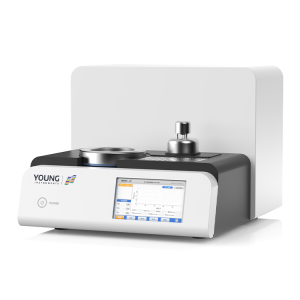
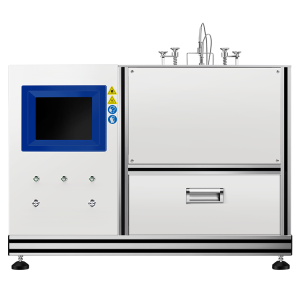
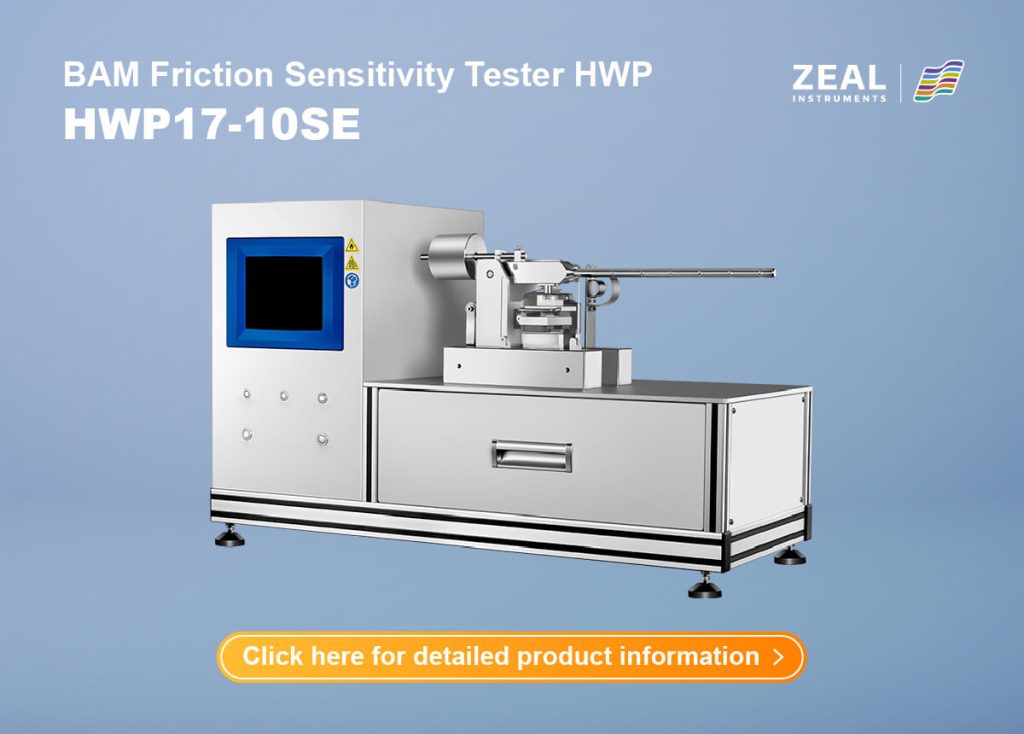
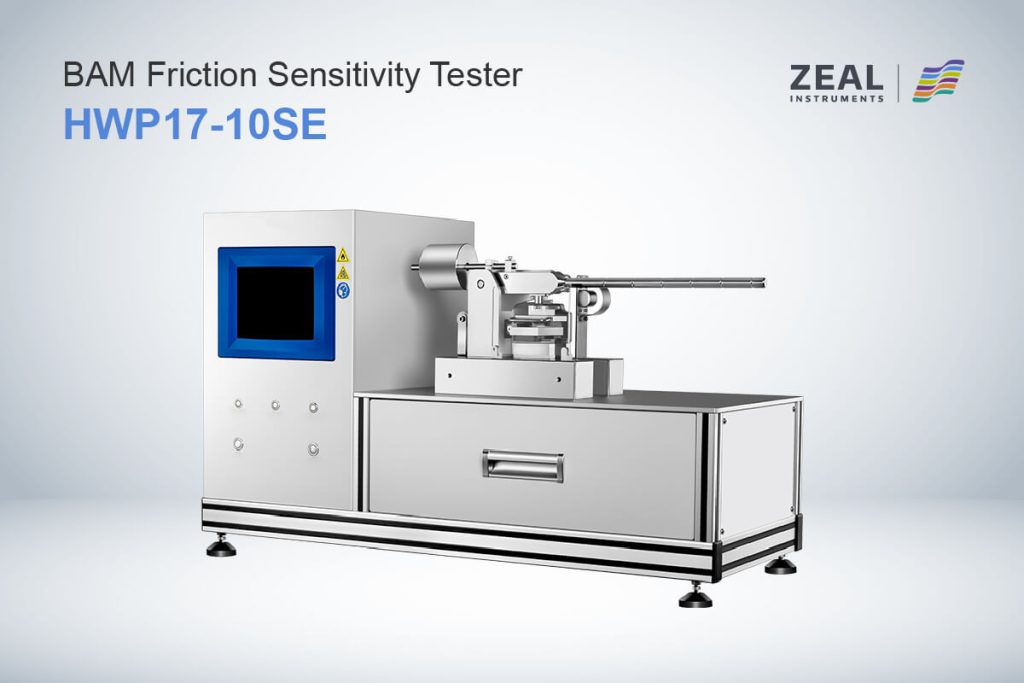
HWP17-10SE BAM Friction Sensitivity Tester
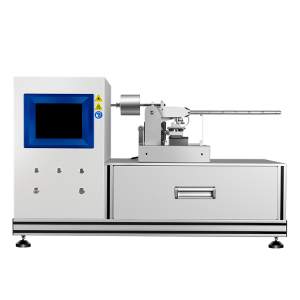
Zeal Instruments’ HWP17-10SE BAM Friction Sensitivity Tester is designed for the friction sensitivity testing of suitable primary explosives, high explosives, propellants, pyrotechnic compositions and other energetic substances.
The system provides selectable load settings across a 1–360 N range, controlled porcelain plate movement, an 8-inch touchscreen, automated test operation and electronic data storage. Optional wireless video monitoring can support observation from a protected location.
The instrument’s extended load capability should be distinguished from the load sequence prescribed by the standard used for a specific test. Laboratories should confirm the required configuration, accessories and compliance documentation before procurement.
For equipment configuration, technical documents or a quotation, contact Zeal Instruments with the required test standard, material type, laboratory location and preferred safety options.

Frequently Asked Questions
What does the BAM friction test measure?
The BAM friction test evaluates how an energetic material responds to controlled sliding friction under a defined normal load. It provides a standardized result for the material in the tested physical condition.
Which materials can be tested with a BAM friction apparatus?
The method may be applied to suitable primary explosives, high explosives, propellants, pyrotechnic compositions and other energetic substances. The laboratory must confirm that the apparatus and selected method are appropriate for the specific material and physical form.
What loads are used in the UN BAM friction test?
The main load sequence specified by UN Test 3(b)(i) is 5, 10, 20, 40, 60, 80, 120, 240 and 360 N. The method also allows intermediate loads where necessary.
What is considered an explosion in the BAM friction test?
Under the method, evidence such as a report, crackling, sparking or flame may indicate an explosion. A colour or odour change may be classified as decomposition instead. The applicable standard provides the final observation criteria.
What is the limiting load?
The limiting load is the lowest tested load at which at least one explosion occurs within the prescribed number of trials. It is used within the method’s classification procedure.
What does a limiting load below 80 N mean?
Under UN Test 3(b)(i), a limiting load below 80 N is considered a positive test result. It is a classification criterion, not a universal safe operating or handling limit.
Is friction sensitivity the same as impact sensitivity?
No. Friction sensitivity concerns sliding contact under load, while impact sensitivity concerns energy delivered by a falling mass. The two methods provide complementary rather than interchangeable information.
Why can porcelain plate condition affect the result?
Wear, scratches, contamination and surface variation can change the interaction between the specimen and the contact surfaces. Laboratories should follow documented inspection, cleaning and replacement criteria.
Why is automated BAM friction testing useful?
Automated movement, parameter management and electronic recording can improve consistency and reduce manual intervention. Remote control and video observation may also increase the distance between the operator and the active test position.
References and Further Reading
- United Nations Manual of Tests and Criteria, Section 13.5.1, Test 3(b)(i): BAM friction apparatus.
- UNECE: About the Manual of Tests and Criteria.
- A Comparative Study of Two BAM Designs for Friction Sensitivity Testing of Explosives.
- Stop Using Limiting Stimuli as a Measure of Sensitivities of Energetic Materials.
- GB/T 21566-2008: Test method for friction sensitivity of explosive dangerous goods.
- GB/T 21848-2008: Determination of the explosive properties of industrial chemicals.
Technical note: Standards and regulations may be amended or replaced. Verify the current applicable edition before using this article for test planning, classification or equipment procurement.


