





















Impact Sensitivity Test: How the BAM Drop Hammer Method Works
An impact sensitivity test evaluates how an energetic material responds when a controlled mechanical impact is applied. One of the most widely recognized methods is the BAM fallhammer, or BAM drop hammer test, in which a defined mass falls from a selected height onto a prepared specimen held in a standardized impact assembly.
Impact sensitivity data can support formulation comparison, research, quality control, dangerous goods classification and broader safety assessment for explosives, propellants, pyrotechnic compositions and other energetic substances.
This guide explains how the BAM impact test works, how nominal impact energy and limiting impact energy are determined, which equipment components influence repeatability, how results should be interpreted and what laboratories should consider when selecting an impact sensitivity tester.
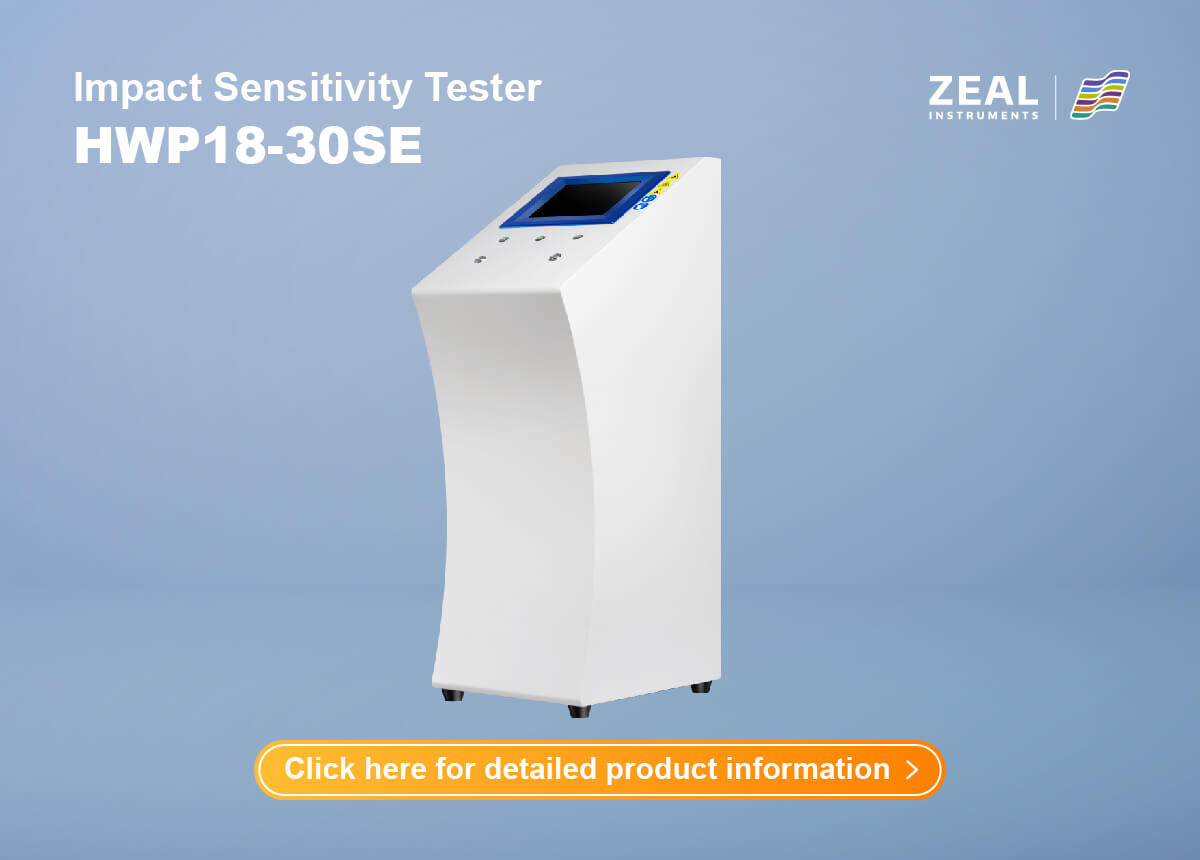
Table of Contents
- What Is an Impact Sensitivity Test?
- Why Impact Sensitivity Testing Is Important
- How the BAM Drop Hammer Method Works
- How Impact Energy Is Determined
- What Is Limiting Impact Energy?
- Main Components of a BAM Drop Hammer Apparatus
- General Impact Sensitivity Test Workflow
- How Impact Sensitivity Results Are Interpreted
- Factors That Affect Impact Sensitivity Results
- BAM and Other Drop-Weight Impact Methods
- Applicable Impact Sensitivity Test Standards
- Impact vs. Friction Sensitivity Testing
- Related Energetic Material Safety Tests
- How to Select an Impact Sensitivity Tester
- References and Technical Sources
- Frequently Asked Questions
What Is an Impact Sensitivity Test?
An impact sensitivity test measures the response of a material to a standardized mechanical impact. In a drop-weight method, a selected mass is released from a controlled height and transfers mechanical energy to a specimen held in a defined test assembly.
The specimen is observed and classified using the reaction criteria defined by the selected method. Recorded observations may include sound, flash, flame, smoke, visible decomposition or explosion. However, not every observable change is automatically classified as a positive result. Laboratories must apply the exact definitions and reporting rules stated in the applicable standard.
Impact sensitivity is a method-dependent property measured under controlled laboratory conditions. It does not represent every type of mechanical or process hazard and should be evaluated together with friction sensitivity, thermal stability, electrostatic behavior and other relevant safety information.
Why Is Impact Sensitivity Testing Important?
Energetic materials may be exposed to mechanical impact during manufacturing, processing, handling, packaging, transport or use. Potential sources include dropped tools, moving equipment, trapped particles, hard-surface contact, mechanical loading and accidental impact events.
Impact sensitivity testing can help laboratories and manufacturers:
- Compare the mechanical sensitivity of different formulations
- Evaluate changes in raw materials or production processes
- Investigate batch-to-batch variation
- Study the effects of particle size, moisture, aging or conditioning
- Support dangerous goods classification and regulatory assessment
- Identify materials that may require additional handling controls
- Generate comparable data for research and quality control
- Assess whether a material should undergo further mechanical sensitivity testing
A result should not be interpreted as proof that a material is safe under every real-world condition. Instead, the test provides standardized information that can be incorporated into a broader material and process risk assessment.
How Does the BAM Drop Hammer Method Work?
The BAM impact test uses a vertical fallhammer apparatus. A prepared specimen is placed inside a defined impact assembly positioned on a rigid anvil. A selected drop weight is raised to a controlled height and released without an additional downward push.
When the falling mass strikes the impact assembly, mechanical energy is transferred through the contact components to the specimen. The laboratory records whether the specimen produces a reaction that meets the positive-response criteria of the selected method.
Different impact energy levels can be generated by changing the drop mass, the drop height or both. Tests are repeated according to the prescribed sequence until the laboratory can report the method-specific impact sensitivity result.
The BAM fallhammer configuration is described in the UN Manual of Tests and Criteria under Test 3(a)(ii). The method is used to measure the sensitivity of solids and liquids to drop-weight impact.
How Is Impact Energy Determined?
The nominal potential energy of a falling mass can be described using the following relationship:
E = m × g × h
- E is the nominal impact energy, usually expressed in joules
- m is the drop mass
- g is gravitational acceleration
- h is the drop height
A heavier drop mass or greater drop height produces a higher nominal energy. For example, increasing the height while keeping the mass unchanged increases the potential energy available before impact.
However, calculated energy is not the only factor that determines the test condition. The geometry, hardness, cleanliness and condition of the impact assembly, specimen preparation, apparatus alignment and selected test method also influence how energy is transferred to the material.
Results from different apparatus designs should therefore not be compared solely on the basis of their nominal energy values unless the equipment configuration, specimen preparation and evaluation method are sufficiently equivalent.
What Is Limiting Impact Energy?
In the BAM fallhammer method, results are commonly expressed as a limiting impact energy. This value is determined through a prescribed sequence of repeated tests at defined energy levels rather than from a single hammer drop.
Under methods that use a 1-in-6 criterion, the limiting impact energy is generally associated with the lowest tested energy level at which at least one defined positive reaction occurs within the required series of six trials. The exact starting point, energy progression, number of trials and reaction criteria must follow the applicable standard.
A lower limiting impact energy generally indicates greater impact sensitivity under the specified test conditions. A higher value generally indicates that more impact energy was required before the defined response occurred.
Limiting impact energy should not be confused with statistical values such as H50 or E50. These values are intended to represent a drop height or energy associated with a specified estimated probability of reaction. Results generated using different test sequences or statistical methods are not automatically interchangeable.
Main Components of a BAM Drop Hammer Apparatus
1. Interchangeable Drop Weights
Interchangeable drop weights allow the laboratory to generate the impact conditions required by the selected method. Each weight should be clearly identified, maintained in suitable condition and verified according to the laboratory’s quality procedures.
2. Vertical Guide System
The guide system controls the path of the falling mass. It should maintain suitable vertical alignment while minimizing lateral movement and unwanted resistance that could affect the drop.
3. Lifting and Height Positioning System
The lifting mechanism raises the selected mass and positions it at the required drop height. Positioning accuracy is important because the nominal impact energy is directly related to height.
4. Release Mechanism
The release system should allow the mass to fall freely without an unintended push or disturbance. Remote release increases the distance between personnel and the active test position.
5. Impact Assembly and Anvil
The specimen is contained within a standardized impact assembly positioned on a rigid anvil. The dimensions, material, hardness, cleanliness and surface condition of the contact components can influence energy transfer and repeatability.
6. Anti-Rebound Mechanism
An anti-rebound design helps control the drop weight after the initial impact and reduces the risk of uncontrolled secondary movement or a second unintended strike.
7. Safety Enclosure
A suitable protective enclosure helps contain fragments and reaction products. The complete laboratory installation should also account for ventilation, remote observation, access control, emergency procedures and the expected hazard level of the material.
8. Control and Data System
Automated systems may support hammer positioning, remote release, parameter display, test sequencing, data storage, energy calculation and report generation. Automation can reduce repetitive manual operations, although it does not replace qualified interpretation or laboratory safety controls.
General Impact Sensitivity Test Workflow
The exact procedure must follow the selected standard, the instrument instructions and the laboratory’s approved operating procedures. The following overview explains the general workflow and is not a substitute for an official test method.
1. Confirm the Material and Test Method
Review the sample identity, physical form, available hazard information and purpose of the evaluation. Confirm that the selected method and apparatus are appropriate for the material.
2. Condition and Prepare the Specimen
Particle size, moisture, solvent content, temperature, aging, homogeneity and previous processing can affect the response. Control and record the required sample conditions before testing.
3. Inspect the Apparatus
Check the drop weight, vertical guide, positioning system, release mechanism, impact assembly, anvil, anti-rebound device and safety enclosure. Damaged, worn or contaminated components can affect repeatability or create additional hazards.
4. Select the Prescribed Test Parameters
Select the drop mass, height, impact assembly and test sequence specified by the applicable method. Unvalidated masses, fixtures or procedures should not be substituted in compliance-oriented testing.
5. Prepare the Test Position and Initiate Remotely
Place the specimen in the required impact assembly using a consistent preparation technique. Clear the controlled area and initiate the test from a protected or remote position wherever possible.
6. Observe and Record the Response
Record the mass, height, nominal energy, specimen condition and observed response. Apply the positive or negative reaction criteria defined by the selected standard rather than relying on an informal judgment.
7. Repeat, Inspect and Report
Complete the prescribed number of repetitions and progression between energy levels. After each test, handle residues according to approved procedures and inspect the impact components before continuing.
How Are Impact Sensitivity Test Results Interpreted?
Impact sensitivity results describe how a specimen responded under the conditions of the selected drop-weight method. Depending on the standard, the result may be reported as a limiting impact energy, drop height, minimum observed reaction level or another method-specific sensitivity value.
In general, a defined positive reaction at a lower impact energy indicates greater sensitivity under the specified conditions. A specimen that requires a higher energy before producing the defined response is generally less impact-sensitive within the same method.
The reported value should not be treated as the exact amount of energy required to initiate the material in every practical situation. Real-world behavior may also be influenced by sample scale, confinement, contamination, geometry, temperature, processing history and the way mechanical energy is transferred.
A complete test report may include:
- Sample identity, batch and physical form
- Sample conditioning and preparation
- Test method, edition and laboratory procedure
- Instrument and impact assembly identification
- Drop weight and drop height
- Nominal impact energy
- Number and sequence of repetitions
- Positive, negative and intermediate observations
- Defined reaction criteria
- Abnormal events or test deviations
- Final reported impact sensitivity value
Factors That Affect Impact Sensitivity Results
Particle Size and Morphology
Changes in particle size, shape and surface area can influence stress concentration, particle fracture, friction between particles and localized heating during impact.
Moisture and Solvent Content
Water or residual solvent can alter the mechanical response of a specimen. Consistent conditioning is important when comparing formulations, production batches or aging studies.
Sample Quantity and Placement
The amount, distribution and position of the specimen within the impact assembly must follow the selected method. Inconsistent preparation can change contact conditions and energy transfer.
Material Homogeneity
Segregation or non-uniform distribution of ingredients can produce different responses between repetitions. Representative sampling and controlled mixing are therefore important.
Temperature and Aging
Temperature, storage time, phase changes and material degradation can alter mechanical properties and sensitivity. Relevant conditioning and storage history should be documented.
Apparatus Alignment and Positioning
Drop height accuracy, guide rail verticality, hammer coaxiality and stable positioning of the impact assembly can affect the actual test condition.
Contact Component Condition
The mass, hardness, surface finish and wear condition of the drop weight, cylinders, rollers, anvils and other contact components should remain within the instrument and method requirements.
Contamination
Foreign particles, residue from previous tests or incompatible cleaning materials may influence sensitivity and can introduce additional chemical or mechanical hazards.
Reaction Classification
The definition of a positive result must be applied consistently. Operator training, protected observation, video recording and clear test records can help reduce subjective variation.
BAM and Other Drop-Weight Impact Test Methods
The BAM fallhammer is one of several apparatus designs used to evaluate the impact sensitivity of energetic materials. Other established approaches include ERL-type drop-weight systems, Rotter-type tests and additional national or laboratory-specific fallhammer methods.
These systems can differ in specimen confinement, striker and anvil geometry, contact surfaces, drop mass, reaction detection, test sequence and statistical analysis. As a result, values produced by different methods should not be assumed to represent the same material property on an identical numerical scale.
When comparing published data, laboratories should confirm:
- The apparatus and impact assembly used
- The specimen form and preparation procedure
- The mass and height range
- The definition of a positive reaction
- The number and sequence of trials
- Whether the result is a limiting energy, H50, E50 or another value
Applicable Impact Sensitivity Test Standards
The applicable method should be selected according to the material, intended market, receiving authority and purpose of the evaluation. Standards and methods referenced for suitable impact sensitivity testing equipment may include the following.
Direct BAM Impact Test Methods
- UN Manual of Tests and Criteria, Section 13.4.2, Test 3(a)(ii): BAM fallhammer method for measuring the sensitivity of solids and liquids to drop-weight impact.
- GB/T 21567-2008: Dangerous goods — Test method for impact sensitivity of explosive substances.
- EN 13631-4: European method addressing the impact sensitivity or insensitiveness of explosives for civil use. Laboratories should confirm whether the receiving authority requires the 2002 edition or a newer adopted edition.
Broader Explosivity and Hazard Assessment Standards
- GB/T 21848-2008: Chemical products for industrial use — Determination of explosion risk.
- GB 5085.5-2007: Identification standards for hazardous wastes — Identification for reactivity.
- NY/T 1860.6-2010: Guidance on the determination of physicochemical properties for pesticides — Part 6: Explodability.
Not every broader explosivity standard is a dedicated BAM impact test method. Its inclusion in an equipment specification may indicate that impact sensitivity data can contribute to the broader assessment required by that standard.
Before beginning a regulatory or compliance-oriented program, verify the current standard edition, required apparatus configuration, reporting criteria and acceptance rules with the customer, certification body or receiving authority.
Impact Sensitivity vs. Friction Sensitivity
Impact sensitivity, shock sensitivity and friction sensitivity describe responses to different external stimuli and should not be treated as interchangeable properties.
A material that does not react at a particular impact level may still be sensitive to friction. Similarly, a material with a relatively low friction sensitivity may still respond to impact under a different test condition.
Laboratories evaluating the mechanical sensitivity of energetic materials should therefore consider both impact and friction methods where appropriate. Learn more about the test principle in our guide to the BAM friction test and friction sensitivity testing, or explore the HWP17-10SE BAM Friction Sensitivity Tester for controlled friction sensitivity testing of explosives, propellants and pyrotechnic compositions.
Related Energetic Material Safety Tests
Impact sensitivity represents only one aspect of energetic material behavior. Depending on the material, intended use and applicable classification procedure, laboratories may need to combine mechanical sensitivity testing with thermal stability, self-heating and adiabatic decomposition assessment.
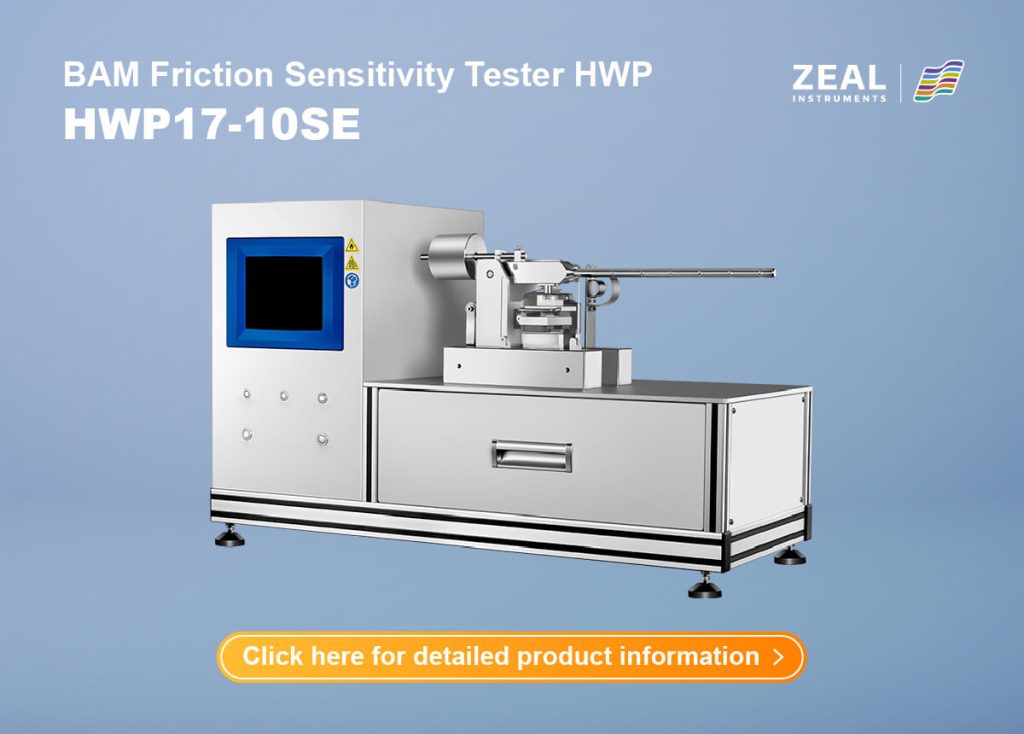
BAM Friction Sensitivity Testing
Impact and friction apply different forms of mechanical stimulus. The HWP17-10SE BAM Friction Sensitivity Tester evaluates how explosives, propellants, pyrotechnic compositions and other energetic materials respond to controlled sliding friction under defined loads.
Friction testing can complement BAM drop hammer testing when a laboratory needs a broader evaluation of mechanical sensitivity. Results from the two methods describe different material responses and should be reported separately.
75 °C Thermal Stability and Self-Heating Testing
Impact sensitivity results do not indicate whether a material may decompose or generate heat during storage, transport or prolonged temperature exposure. The 75 °C Thermal Stability / Self-Heating Substance Tester supports controlled evaluation of explosive substances, desensitized explosives, self-reactive substances and organic peroxides.
This type of test can provide additional information about heat generation, visible decomposition and other changes that may occur when a specimen is maintained under prescribed thermal conditions.

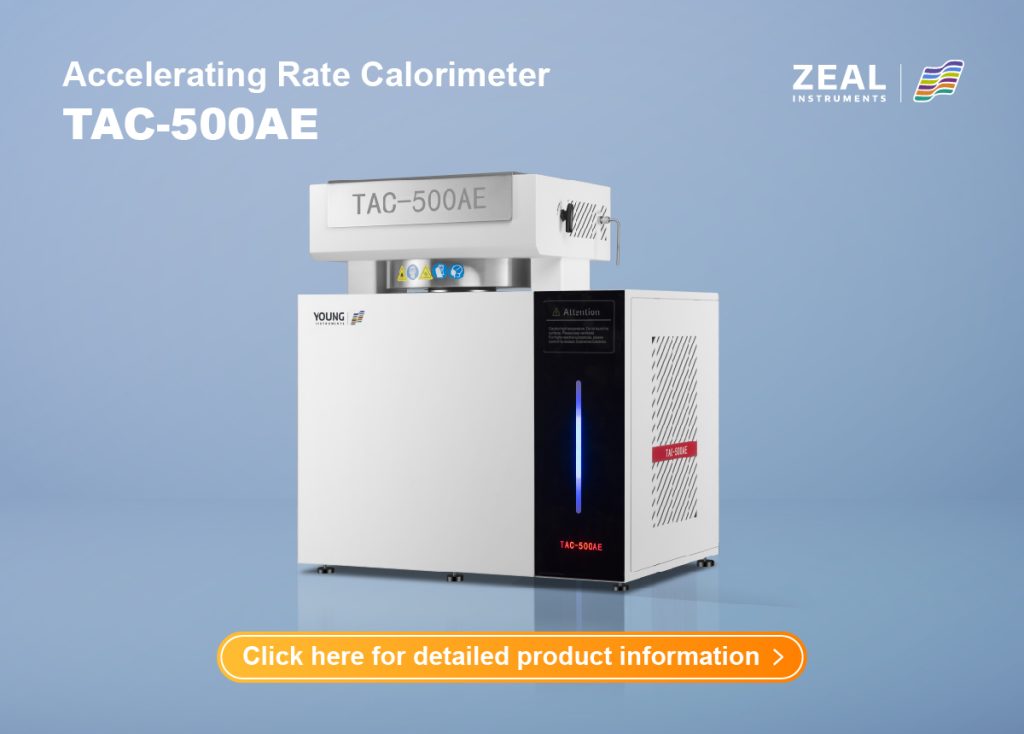
Accelerating Rate Calorimetry
Where laboratories need to investigate thermal decomposition, self-heating, adiabatic temperature rise, pressure generation or potential thermal runaway, the TAC-500AE Accelerating Rate Calorimeter can provide additional thermodynamic and kinetic information under near-adiabatic test conditions.
Accelerating rate calorimetry is particularly useful when a mechanical sensitivity result must be considered alongside decomposition onset, self-heating rate and the possible severity of an uncontrolled thermal event.
Impact, friction, thermal stability and accelerating rate calorimetry measure different properties. The appropriate combination should be selected according to the material type, expected hazard, applicable standard and intended research, quality control or classification objective.
How to Select an Impact Sensitivity Tester
Important factors to evaluate when selecting a BAM impact sensitivity tester include:
- Compatibility with the required test method and standard edition
- Supported specimen forms and impact assemblies
- Available drop-weight combinations
- Drop-height and impact-energy ranges
- Height positioning accuracy
- Guide rail verticality and hammer coaxiality
- Material, hardness and replaceability of impact components
- Reliable remote hammer lifting and release
- Anti-rebound protection
- Safety enclosure and remote observation options
- Automated parameter control and test sequencing
- Data storage, energy calculation and report generation
- Inspection, calibration and maintenance support
- Installation guidance and operator training
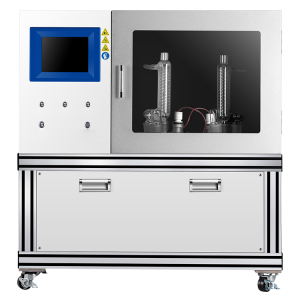
Zeal Instruments HWP18-30SE Impact Sensitivity Tester
The Zeal Instruments HWP18-30SE Impact Sensitivity Tester is designed to determine the impact sensitivity of energetic materials, including primary explosives, high explosives, propellants and pyrotechnic compositions.
The system supports 0.5 kg, 1 kg, 2 kg, 5 kg and 10 kg drop weights, a drop-height range of 0 to 1000 mm and an impact-energy range of 0.5 to 100 J. Its positioning accuracy is specified as ±1 mm.
Available functions include wireless remote hammer lifting and positioning, remote drop-weight release, automatic latching, anti-rebound protection, a protective enclosure, real-time test-status display, configurable test sequences, data storage, automatic analysis and report review.
The impact head is manufactured from quenched steel with a specified Rockwell hardness of HRC 60–63. The system also provides dedicated tooling for solid and liquid sample configurations where required by the selected method.
References and Technical Sources
- United Nations Manual of Tests and Criteria
- GB/T 21567-2008 — Dangerous Goods: Test Method for Impact Sensitivity of Explosive Substances
- GB/T 21848-2008 — Chemical Products for Industrial Use: Determination of Explosion Risk
- GB 5085.5-2007 — Identification Standards for Hazardous Wastes: Identification for Reactivity
- EN 13631-4 — Explosives for Civil Uses: Impact Sensitivity or Insensitiveness Assessment
- Applicable instrument documentation and approved laboratory operating procedures
Frequently Asked Questions
What does an impact sensitivity test measure?
It evaluates how a material responds to a controlled mechanical impact under standardized conditions. Depending on the method, the result may be reported as a limiting impact energy, drop height, H50, E50 or another method-specific sensitivity value.
What is a BAM drop hammer?
A BAM drop hammer, also called a BAM fallhammer, is a standardized apparatus in which a selected mass falls from a controlled height onto a specimen held in a defined impact assembly.
How is drop hammer impact energy calculated?
Nominal potential energy is calculated from the drop mass, gravitational acceleration and drop height. Interpretation must also account for the apparatus design, impact assembly, specimen condition and selected standard.
What is limiting impact energy?
Limiting impact energy is a method-specific value determined through repeated trials at defined energy levels. Under a method using a 1-in-6 criterion, it is generally associated with the lowest tested energy at which at least one defined positive reaction occurs in six trials.
Is limiting impact energy the same as H50 or E50?
No. Limiting impact energy is usually determined using a prescribed pass-and-fail test sequence. H50 or E50 values are statistical estimates of the height or energy associated with a specified probability of reaction.
Which materials can be evaluated?
Suitable methods may be used for primary explosives, high explosives, propellants, pyrotechnic compositions and other energetic solids or liquids. The laboratory must confirm that the selected method and fixtures are appropriate for the specific substance.
Does a negative result mean the material is safe?
No. A negative result only describes the response under the tested impact conditions. Material safety may also depend on friction sensitivity, thermal stability, self-heating behavior, electrostatic response, confinement, contamination and processing conditions. Additional testing should be selected according to the material and assessment objective.
Are impact sensitivity and shock sensitivity the same?
No. Drop-weight impact sensitivity and shock sensitivity use different stimulus conditions and test configurations. Their numerical results should not be treated as interchangeable.
Why are remote operation and anti-rebound protection important?
Remote operation increases the distance between personnel and the active test position. Anti-rebound protection helps control the drop weight after impact and reduces the risk of unintended secondary movement.


