







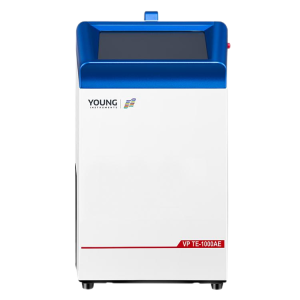


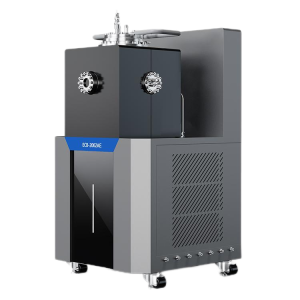

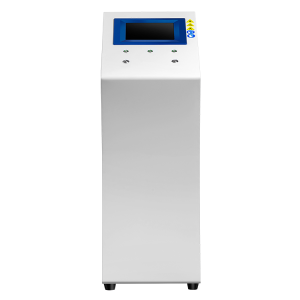
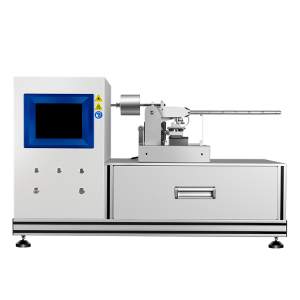
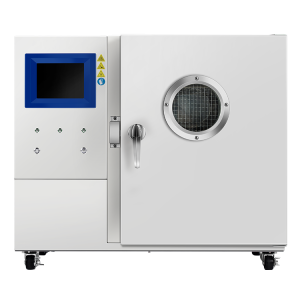


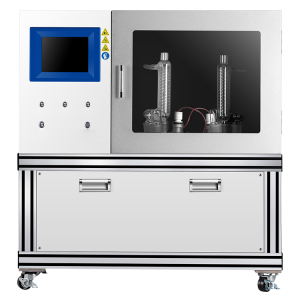


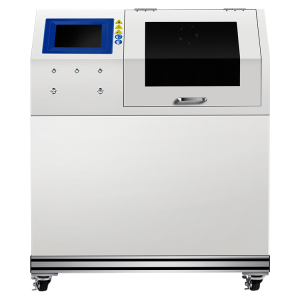

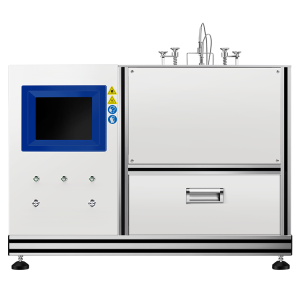






BAC Series Battery Adiabatic Calorimeter: Testing Capabilities
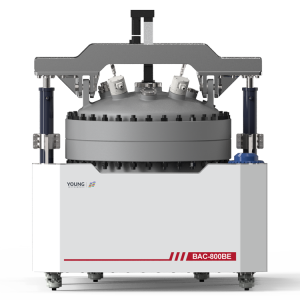
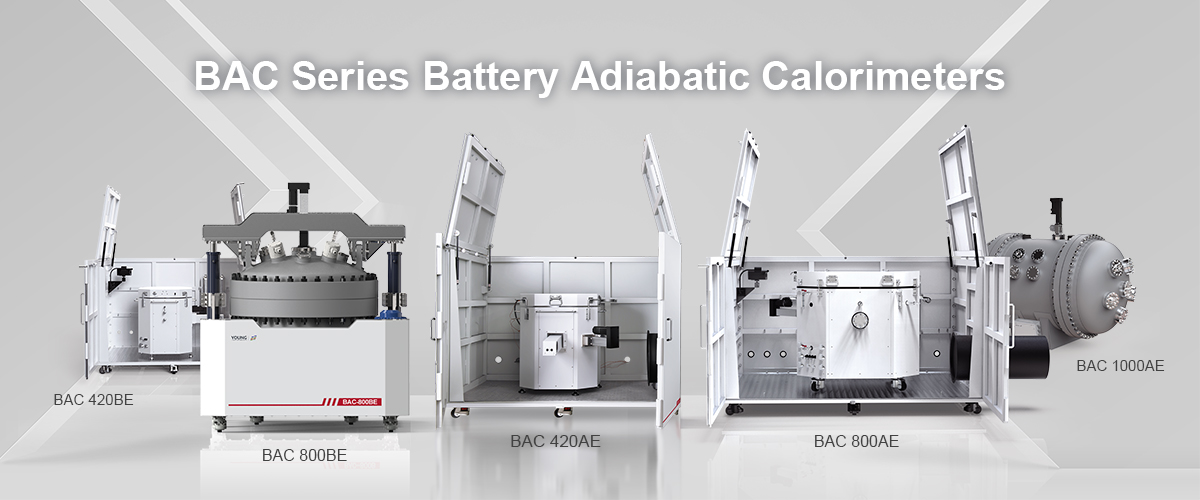
The BAC series large-scale battery adiabatic calorimeters support thermal safety and thermal management research across the lithium-ion battery industry. The series offers seven test modes: Heat-Wait-Seek (HWS), specific heat capacity, charge/discharge calorimetry, adiabatic temperature rise, temperature-difference baseline, scanning, and isothermal. Each mode supports user-defined parameter configurations.
The following sections describe key testing capabilities built on these modes.
Adiabatic Thermal Runaway (HWS)
In the classic Heat-Wait-Seek (HWS) mode, the cell is heated in discrete steps. After each step, the system waits for thermal equilibration and then searches for self-heating. Once the self-heating onset temperature (T₁) is detected, adiabatic tracking begins, yielding key thermal characteristics including the thermal runaway trigger temperature (T₂) and the maximum thermal runaway temperature (T₃).
Overcharge Thermal Runaway
Coupled with a battery cycler, the cell is connected via feedthrough terminals in the chamber wall and subjected to controlled overcharge. Using the charge/discharge calorimetry mode, the system adiabatically tracks temperature changes to extract overcharge-specific thermal runaway characteristics. Multi-parameter monitoring and gas-evolution analysis can be integrated to capture the complete runaway profile.
Nail-Penetration Thermal Runaway
A nail-penetration actuator mechanically induces an internal short circuit, driving the cell into thermal runaway. The cell is held under adiabatic conditions and monitored after the nail is fired. Multi-parameter monitoring and gas-evolution analysis can be integrated to capture the complete runaway profile.
Charge/Discharge Calorimetry
Using adiabatic tracking, the mode quantifies total heat generation and heat-generation rate during charge and discharge cycling. The optional cryogenic module extends testing to −25 °C. Combined with contact or non-contact temperature monitoring, the system maps surface temperature distribution during electrochemical cycling.
Specific Heat Capacity
Based on differential adiabatic tracking, the mode uses a reference block of known specific heat capacity for thermal-loss correction. With an external programmable power supply and heating sheet, the system measures both average and temperature-dependent specific heat capacity. An optional cryogenic module extends the lower temperature limit to −25 °C.
Adiabatic Temperature Rise
This dedicated mode implements the adiabatic temperature-rise test specified in GB/T 36276-2023, Lithium-ion Batteries for Electrical Energy Storage, distinct from the general HWS protocol. An optional visible-light camera detects cell swelling, cracking, venting, and ignition events during the test.
For detailed specifications, application notes, or to discuss your specific test protocol, contact us.


