


Lithium Battery

2023.08.15

Lithium-ion batteries are used in electric vehicles, energy storage systems, portable electronics, power tools and industrial equipment. As cell capacity, energy density and fast-charging requirements continue to increase, battery manufacturers and research laboratories need more reliable data on heat generation, thermal stability and thermal runaway behavior. Zeal Instruments provides lithium battery thermal analysis and calorimetry solutions for cell developers, material researchers, pack design teams and safety testing laboratories.

Our instruments help users evaluate thermal runaway mechanisms, compare battery materials, study charge and discharge heat generation, and support safety design decisions for cells, modules and battery packs.

Why Lithium Battery Thermal Safety Testing Matters

A lithium-ion battery is a complex electrochemical system. Under normal operation, heat may be generated by ohmic resistance, polarization, side reactions and temperature-dependent changes inside the cell. If the battery is well designed and properly managed, this heat can be controlled through cell structure, cooling design and battery management systems.

Thermal runaway occurs when heat generation becomes faster than heat dissipation. Once this self-heating process accelerates, the cell temperature may rise rapidly and trigger a chain of internal reactions. These reactions may include decomposition of the solid electrolyte interphase, separator shrinkage or melting, electrolyte decomposition, cathode oxygen release and internal short circuit formation. In severe cases, the result may be venting, fire, explosion or thermal propagation to neighboring cells.

For this reason, lithium battery thermal safety testing is not only a certification requirement. It is also a practical R&D tool. Testing data can help engineers answer key design questions: At what temperature does self-heating begin? How fast does the temperature rise under adiabatic conditions? How much heat is released during abuse? How do different cathode materials, electrolytes, separators or states of charge influence thermal risk? Which cell design is more stable under mechanical, electrical or thermal abuse?

Key Testing Standards and Compliance Context

Different markets and applications may require different lithium battery safety standards. IEC 62133 is widely used for the safety evaluation of portable sealed secondary lithium cells and batteries. It considers intended use and reasonably foreseeable misuse, making it important for batteries used in consumer electronics, portable equipment and many industrial devices.

UN 38.3 is closely related to transportation safety. Lithium cells and batteries generally need to pass the required UN 38.3 test series before they can be transported as dangerous goods. These tests evaluate whether batteries can withstand transport-related conditions such as altitude simulation, thermal cycling, vibration, shock, external short circuit, impact or crush, overcharge and forced discharge, depending on the battery type.

GB/T 31485 is an important Chinese safety test standard for traction battery cells and modules. It is often referenced in the evaluation of electric vehicle battery safety and abuse tolerance. Related tests may include thermal abuse, overcharge, short circuit, crush, nail penetration or other conditions used to assess whether a battery may ignite, explode or fail dangerously.

Laboratory calorimetry does not replace formal certification testing. Instead, it gives engineers deeper thermal and reaction data before, during and after standard abuse tests. By combining standard test requirements with calorimetric data, teams can improve material selection, cell structure, module spacing, thermal management and safety protection strategies.

Instrument Types for Lithium Battery Thermal Analysis

Accelerating Rate Calorimeter (ARC)

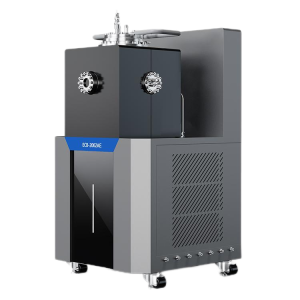
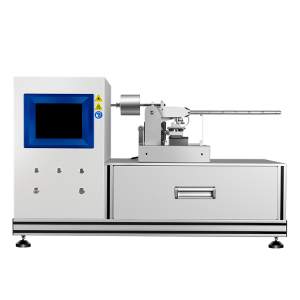
An Accelerating Rate Calorimeter is used to study self-heating and runaway reactions under near-adiabatic conditions. For lithium battery research, ARC testing can help identify onset temperature, self-heating rate, adiabatic temperature rise, pressure behavior and reaction kinetics. This is useful for evaluating battery materials, electrolytes, small cells and abuse scenarios where heat accumulation is a key concern.

Recommended Zeal product: Accelerating Rate Calorimeter TAC-500AE

Battery Adiabatic Calorimeters

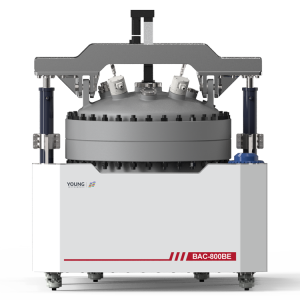
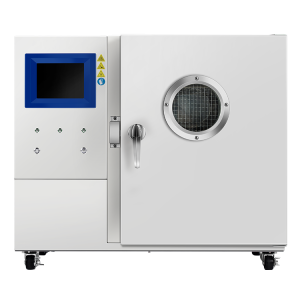
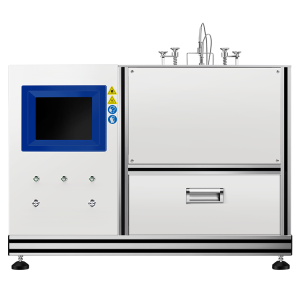
Battery adiabatic calorimeters are designed for cell-level and module-level testing. They can simulate an adiabatic environment and measure temperature, pressure and heat generation during thermal runaway or controlled charge/discharge testing. Depending on cell size and test purpose, they may be used for cylindrical cells, pouch cells, prismatic cells, large-format cells and small modules.

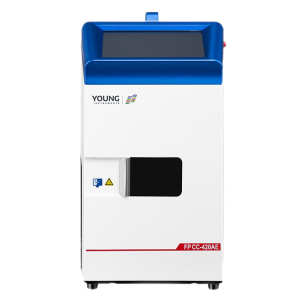
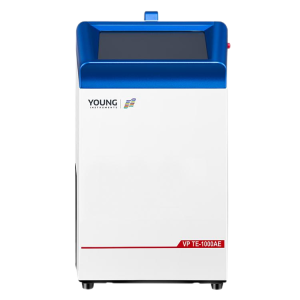
For small-format cells and early-stage R&D, the Small Battery Adiabatic Calorimeter BAC-200AE supports pouch cells, cylindrical cells and coin cells. For larger cells and modules, Zeal offers large battery adiabatic calorimeters such as BAC-420AE, BAC-800BE and BAC-1000AE. These systems help users study thermal runaway onset temperature, maximum temperature rise rate, adiabatic temperature rise, gas pressure behavior and charge/discharge heat generation.

Differential Scanning Calorimeter (DSC)

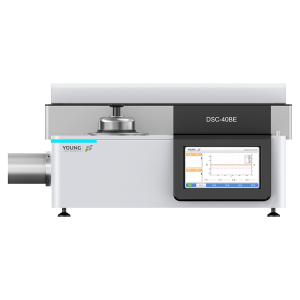
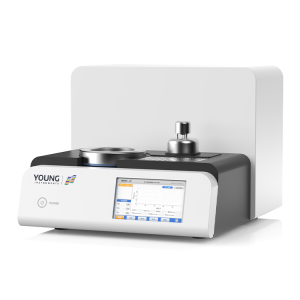
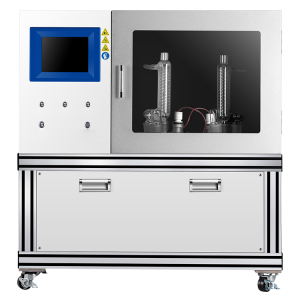
Differential Scanning Calorimetry is widely used for battery material screening. DSC measures heat flow as a sample is heated, cooled or held under controlled conditions. In lithium battery research, it can be used to compare the thermal stability of electrode materials, electrolytes, separators, binders and mixed material systems. DSC results help researchers identify endothermic or exothermic events, phase transitions, decomposition behavior and reaction onset temperatures.

Recommended Zeal products: Differential Scanning Calorimeter DSC-40BE and Differential Scanning Calorimeter DSC-40AE

Thermal Conductivity and Thermal Parameter Testing

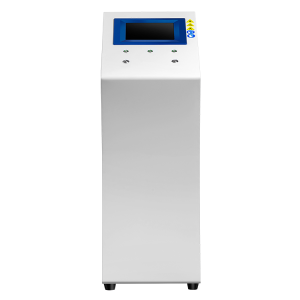
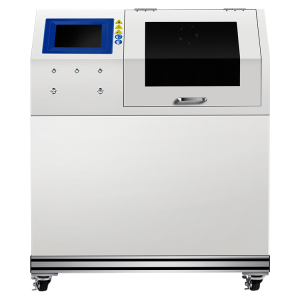
Battery thermal management design also requires fundamental parameters such as thermal conductivity, specific heat capacity and heat transfer behavior. These parameters support simulation, cooling design and pack-level safety modeling. Zeal’s 3D Thermal Properties Analyzer and Dual-state Thermal Parameter Tester can support the thermal characterization of battery cells and materials.

Typical Applications

Zeal lithium battery testing solutions can support battery material screening, electrolyte formulation comparison, cell safety evaluation, thermal runaway mechanism research, charge/discharge heat generation testing, module-level abuse testing and battery pack thermal management design. They are suitable for battery manufacturers, EV and energy storage companies, university laboratories, research institutes and third-party testing centers.

Common test objectives include identifying the first self-heating signal, comparing thermal stability between different chemistries, studying the influence of state of charge, evaluating the effect of cell format, measuring gas pressure behavior during runaway, and collecting data for simulation models. For manufacturers, these results can help reduce development risk before large-scale production. For research teams, they provide quantitative data for publications, safety analysis and next-generation battery design.

Build a Safer Battery Testing Workflow with Zeal Instruments

A complete lithium battery thermal safety workflow often combines multiple instruments. DSC can screen materials and detect early thermal events. ARC can evaluate self-heating and runaway reaction behavior under near-adiabatic conditions. Battery adiabatic calorimeters can test complete cells or modules under more realistic abuse and heat-generation scenarios. Thermal parameter testers can provide the data needed for thermal simulation and cooling system design.

Zeal Instruments helps laboratories select suitable instruments according to sample size, battery format, test temperature, pressure range, abuse method, data requirements and safety requirements. Whether you are developing a new cell chemistry, improving EV battery safety, validating energy storage system design or building a dedicated battery safety laboratory, Zeal can provide professional lithium battery thermal analysis and calorimetry solutions.

FAQ

What is the best instrument for lithium battery thermal runaway testing?

For complete cells and modules, a battery adiabatic calorimeter is usually the preferred instrument because it can monitor temperature, pressure and heat generation during thermal runaway under adiabatic conditions. For materials and small samples, ARC and DSC are often used for earlier-stage screening.

Can DSC be used for lithium battery safety research?

Yes. DSC is useful for studying the thermal stability of electrode materials, electrolytes, separators and mixed battery materials. It is commonly used to identify reaction onset temperature, heat flow behavior and decomposition events.

Why is adiabatic testing important for lithium batteries?

Adiabatic testing reduces heat loss to the surrounding environment. This allows researchers to observe self-heating and runaway behavior closer to worst-case thermal accumulation conditions, which is important for safety assessment and thermal model development.

Does Zeal equipment support IEC 62133, UN 38.3 or GB/T 31485 certification?

Zeal instruments provide thermal analysis and calorimetry data that can support R&D, safety evaluation and preparation for standard testing. Formal certification depends on the specific test program, battery type, target market and accredited laboratory requirements.

How should I choose between ARC, DSC and a battery adiabatic calorimeter?

Choose DSC for material-level thermal screening, ARC for self-heating and reaction hazard analysis, and battery adiabatic calorimeters for cell-level or module-level thermal runaway and heat-generation studies. Many laboratories use these instruments together to build a complete battery safety testing workflow.