





















Cell Thermal Runaway in Lithium-Ion Batteries: Causes, Testing, and Prevention
Cell thermal runaway is one of the most serious safety risks in lithium-ion batteries. It refers to an uncontrolled internal exothermic reaction inside a battery cell, forming a destructive cycle of heat generation, accelerated reaction, and rapid temperature rise. Once this process begins, it may lead to swelling, venting, fire, or even explosion.
In a normally operating lithium-ion battery, internal chemical reactions remain stable and controllable, and the generated heat can be dissipated in time. However, under abnormal conditions, the heat generated inside the cell may far exceed the heat released to the surrounding environment. This imbalance can trigger a chain reaction, causing the cell temperature to rise sharply within a very short time and creating severe safety hazards.
Three Major Triggers of Cell Thermal Runaway
Cell thermal runaway is usually triggered by mechanical abuse, electrical abuse, or thermal abuse. These external or internal stress conditions can damage the cell structure, accelerate side reactions, and push the battery beyond its safe operating limits.
Mechanical Abuse
Mechanical abuse includes crushing, collision, impact, or nail penetration. External force may directly damage the separator between the positive and negative electrodes, leading to an internal short circuit. Once a short circuit occurs, a large amount of Joule heat can be generated rapidly, triggering cell thermal runaway.
Electrical Abuse
Electrical abuse mainly includes overcharge, over-discharge, and short circuit. Overcharge may promote lithium dendrite growth, which can pierce the separator and cause internal short circuits. Over-discharge may damage the current collector and internal cell structure, increasing the risk of abnormal heat generation and rapid temperature rise.
Thermal Abuse
Thermal abuse occurs when a battery is exposed to long-term high temperatures, excessive environmental heat, or cooling system failure. As the internal thermal balance is gradually destroyed, battery materials may begin to decompose and release heat, further accelerating the thermal runaway process.
Cell Thermal Runaway: A Progressive Chain Reaction
Thermal runaway does not usually occur as a single instant event. It is a progressive chain of exothermic reactions. Once the temperature exceeds a critical threshold, the reaction can become uncontrollable.
Early Warning Stage
At the early stage, the protective films inside the battery begin to decompose, and the cell starts to generate heat slowly. This self-heating behavior is an important warning signal for battery thermal safety evaluation.
Internal Short-Circuit Stage
As the temperature continues to rise, the separator may shrink, melt, or fail. Direct contact between the positive and negative electrodes can occur, causing a rapid temperature rise and accelerating the reaction.
Severe Combustion Stage
At the severe stage, internal materials decompose intensely and release flammable gases. The cell may vent, ignite, or explode, and the temperature can rise dramatically within a very short time.
Battery Accelerating Rate Calorimeter: A Precise Platform for Measuring Cell Thermal Runaway Behavior
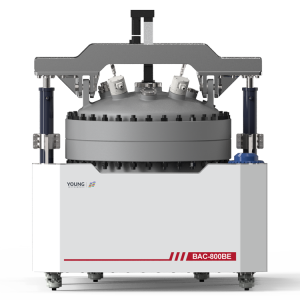
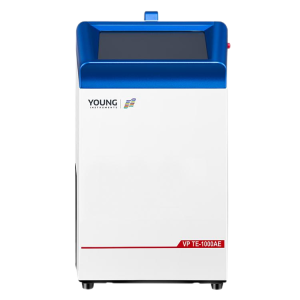
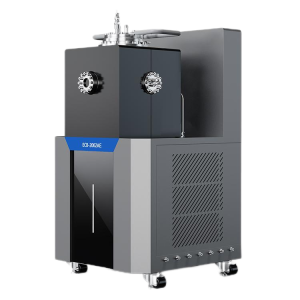
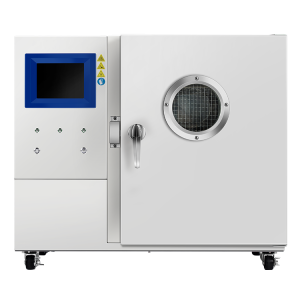
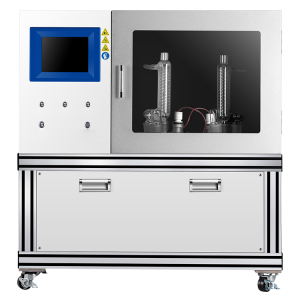
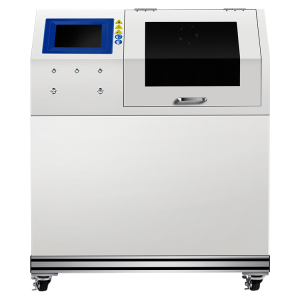
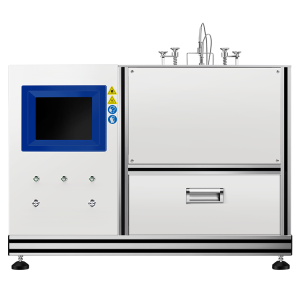
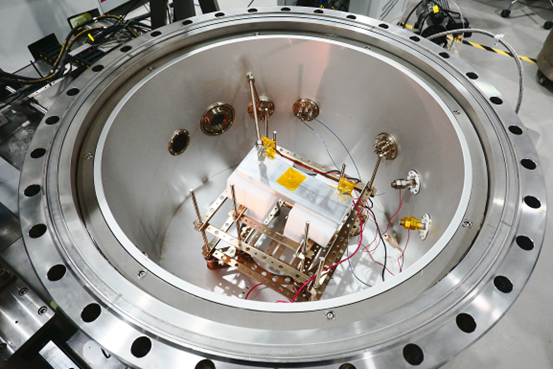
The chain reaction of cell thermal runaway involves complex internal heat generation and material decomposition processes. To accurately capture the complete process of self-heating, reaction acceleration, and thermal runaway triggering, laboratories need a dedicated instrument that can track cell self-heating behavior under near-adiabatic conditions: the Battery Accelerating Rate Calorimeter, also known as ARC.
ARC is based on the principle of adiabatic tracking. Through the HWS mode, which means Heat-Wait-Seek, the system gradually heats the battery under near-zero heat-loss boundary conditions and continuously searches for self-heating signals from the cell.
Once the system detects that the sample temperature rise rate exceeds the preset threshold, the instrument switches to adiabatic tracking mode. It automatically compensates for environmental heat loss and precisely records the full thermal runaway process, including self-heating onset, accelerated temperature rise, thermal runaway triggering, temperature change, adiabatic temperature rise rate, and total heat release.
As a core instrument for battery thermal safety research, ARC provides several key capabilities.
Whole-Cell In-Situ Measurement
ARC can directly test complete battery cells, allowing the results to reflect the real thermal behavior of finished cells instead of relying only on indirect inference from small material samples.
Full-Process Dynamic Tracking
ARC continuously records the complete temperature rise curve from slow self-heating to severe thermal runaway. It helps identify key parameters such as the self-heating onset temperature and the thermal runaway trigger temperature.
Kinetic Parameter Output
Based on adiabatic temperature rise data, ARC can support the derivation of reaction kinetic parameters, including activation energy and pre-exponential factor. These parameters provide fundamental input data for thermal runaway simulation models.
Quantitative Comparison of Multiple Designs
ARC supports comparative evaluation of different battery chemistries, structural designs, and aging states. It provides a quantitative basis for thermal safety grading during the R&D stage.
Why Laboratory Simulation of Cell Thermal Runaway Is Necessary
To identify thermal runaway risks in advance and verify the passive safety boundary of batteries under extreme conditions, lithium-ion batteries need to undergo abuse testing in safety laboratories. These tests simulate extreme external trigger conditions and evaluate the safety limits of the battery.
Nail Penetration Test
The nail penetration test simulates an internal short circuit caused by a sharp object piercing the cell. During the test, cell temperature, voltage, and deformation are monitored to evaluate whether the battery catches fire or explodes.
Crush and Impact Test
Crush and impact tests reproduce mechanical abuse conditions such as collision, compression, or heavy object impact. These tests evaluate structural deformation resistance and internal short-circuit risk.
High- and Low-Temperature Test
High- and low-temperature tests expose batteries to extreme temperature conditions through cycling or constant-temperature holding. They are used to evaluate temperature adaptability and thermal stability.
Overcharge and Over-Discharge Test
Overcharge and over-discharge tests operate the battery outside its normal voltage range. These tests help verify BMS protection strategies and the cell’s resistance to electrical abuse.
Thermal Propagation Test
Thermal propagation testing triggers thermal runaway in a single cell within a module to evaluate whether insulation, spacing, cooling, and thermal barrier designs can prevent heat from spreading to neighboring cells.
The Value of ARC Data in Cell Thermal Runaway Research
Abuse tests such as nail penetration, crush, high temperature, and overcharge can verify battery performance under specific extreme conditions. However, to deeply understand the intrinsic mechanism of cell thermal runaway and improve safety from the source, accurate thermal kinetic data from ARC is essential.
Material System Safety Evaluation
ARC can accurately measure the self-heating onset temperature and thermal runaway trigger temperature. These parameters help identify the intrinsic thermal hazards of battery materials and support material selection and electrolyte formulation optimization.
Quantitative Comparison of Battery Designs
Through adiabatic temperature rise curves, maximum temperature rise rate, and heat release per unit mass, ARC data can be used to compare the severity of heat generation among different chemistries and cell structures. This supports cathode and anode material modification as well as cell structure iteration.
Thermal Management Simulation Input
High-precision thermal characteristic parameters can be imported into thermal runaway kinetic models. These models help predict module-level thermal propagation risks and support the development of warning thresholds and thermal management strategies.
Safety Grading During R&D
Based on ARC data, laboratories can establish cell thermal safety evaluation benchmarks. This allows potential material and design risks to be screened at an early R&D stage, helping reduce thermal runaway risks before batteries enter mass production.
How to Prevent Cell Thermal Runaway from the Source
Strict laboratory testing is not only used to screen out unsafe products. More importantly, it provides data for improving battery design. Thermal runaway prevention should be built from three levels: materials, structure, and system control.
Material Level: Building a More Heat-Resistant Core
At the material level, battery safety can be improved by selecting cathode materials with stronger thermal stability and using ceramic-coated separators with better heat resistance. These solutions can delay separator melting and improve the thermal runaway trigger threshold.
Flame-retardant additives can also be used in electrolytes to reduce flammability and slow down the exothermic reaction chain.
Structural Level: Improving Heat Dissipation and Isolation
At the structural level, battery packs can be equipped with liquid cooling or air cooling systems to remove operating heat in time. Thermal insulation materials such as aerogel can be used to block heat transfer between cells.
In addition, pressure relief devices such as explosion-proof valves can help release internal pressure quickly and reduce the risk of pressure-driven explosion.
System Level: Intelligent Warning and Active Protection
At the system level, the battery management system monitors cell temperature, voltage, current, and pressure in real time. Once abnormal signals are detected, the system can activate current limitation, cooling, warning, or shutdown measures to reduce the risk of cell thermal runaway.
Conclusion
Cell thermal runaway is a complex and dangerous chain reaction inside lithium-ion batteries. It can be triggered by mechanical abuse, electrical abuse, or thermal abuse, and may progress from slow self-heating to internal short circuit, gas release, fire, and explosion.
For battery developers and safety laboratories, understanding cell thermal runaway requires more than basic abuse testing. ARC testing provides critical thermal safety data, including self-heating onset temperature, thermal runaway trigger temperature, adiabatic temperature rise rate, and heat release behavior.
By combining abuse testing, ARC thermal analysis, material optimization, structural design, and intelligent BMS protection, battery manufacturers can better evaluate risks, improve safety design, and prevent cell thermal runaway from the source.


