





















UN Test N.5 Apparatus for Division 4.3 Water-Reactive Flammable Gas Classification
In the dangerous goods transport system, substances which, in contact with water, emit flammable gases are classified as Division 4.3, commonly known as “Dangerous When Wet.”
The UN Recommendations on the Transport of Dangerous Goods, IMDG Code, ADR, and Chinese GB standards all set mandatory requirements for the classification and testing of these substances.
If companies cannot accurately determine whether a product belongs to Division 4.3, or identify its correct Packing Group, they may face risks such as:
- Non-compliant transport documents
- Customs rejection or return shipment
- Warehousing restrictions
- Safety incident liability
- Dangerous goods classification errors
The core basis for classification is UN Test N.5, specified in Part III, sub-section 33.4 of the UN Manual of Tests and Criteria. This method provides a complete testing procedure consisting of screening tests and a gas evolution rate test.
Division 4.3 Classification Criteria: Quantitative Thresholds for Packing Groups
The classification of substances which emit flammable gases in contact with water is not based only on qualitative judgment. It depends on precise quantitative grading according to the gas evolution rate.
| Packing Group | Classification Criteria |
| PG I | The substance reacts vigorously with water at ambient temperature, and the gas produced generally shows a tendency to ignite spontaneously; or the flammable gas evolution rate is ≥10 L/kg·min. |
| PG II | The substance reacts readily with water at ambient temperature, and the maximum flammable gas evolution rate is ≥20 L/kg·h, but it does not meet the criteria for PG I. |
| PG III | The substance reacts readily with water at ambient temperature, and the maximum flammable gas evolution rate is >1 L/kg·h, but it does not meet the criteria for PG I or PG II. |
A key point is that the spontaneous ignition tendency for PG I can be determined directly through screening tests, without proceeding to the rate test. PG II and PG III classification, however, depends entirely on accurate measurement of the gas evolution rate.
A standardized UN Test N.5 Apparatus is therefore necessary for obtaining compliant classification data.
UN Test N.5 Method: From Screening to Quantitative Measurement
UN Test N.5 is included in the UN Manual of Tests and Criteria, Part III, sub-section 33.4. The method is divided into two stages:
- Screening Test
- Rate of Gas Evolution Test
Stage 1: Screening Test
The purpose of the screening test is to quickly identify high-risk substances that show a spontaneous ignition tendency and should be directly classified as PG I.
One of the following three contact methods may be used:
- Water bath screening: A small amount of sample, approximately 2 mm in diameter, is immersed in distilled water at 20°C.
- Filter paper screening: The sample is placed at the center of filter paper floating on the surface of distilled water at 20°C.
- Pile screening: The sample is formed into a pile approximately 20 mm high and 30 mm in diameter, and 20°C water is added dropwise into a small depression at the top.
If gas ignition occurs in any screening test, no further testing is required. The substance is directly classified as Division 4.3, PG I.
Stage 2: Rate of Gas Evolution Test
If no spontaneous ignition occurs during the screening test, the test proceeds to the quantitative stage: the Rate of Gas Evolution Test.
This is the core application scenario of the UN Test N.5 Apparatus.
The gas evolution rate test measures the volume of flammable gas released when the sample reacts with water under controlled conditions. The result is used to determine whether the material belongs to PG I, PG II, or PG III according to the defined thresholds.
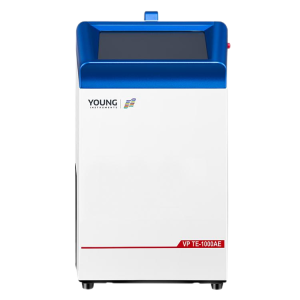
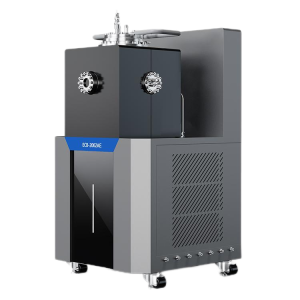
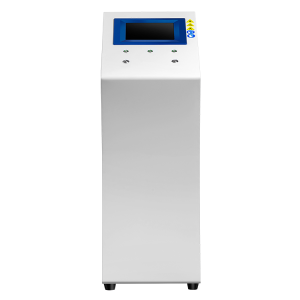
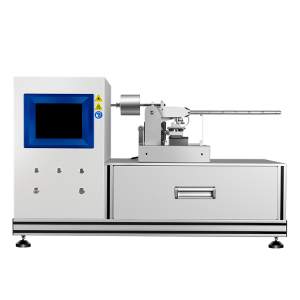
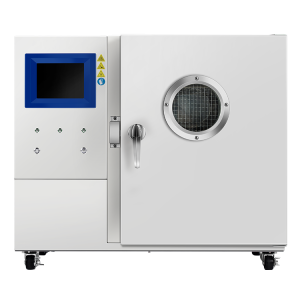
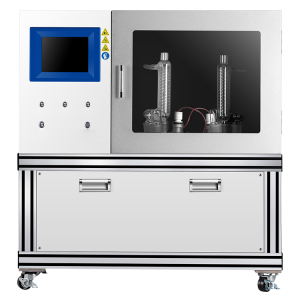
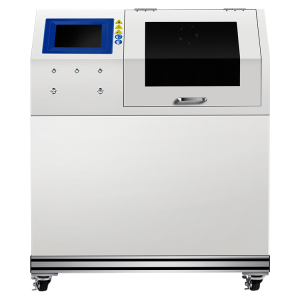
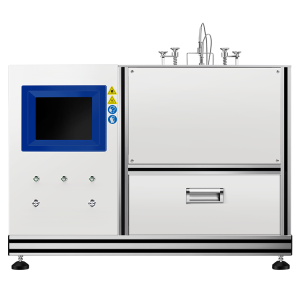
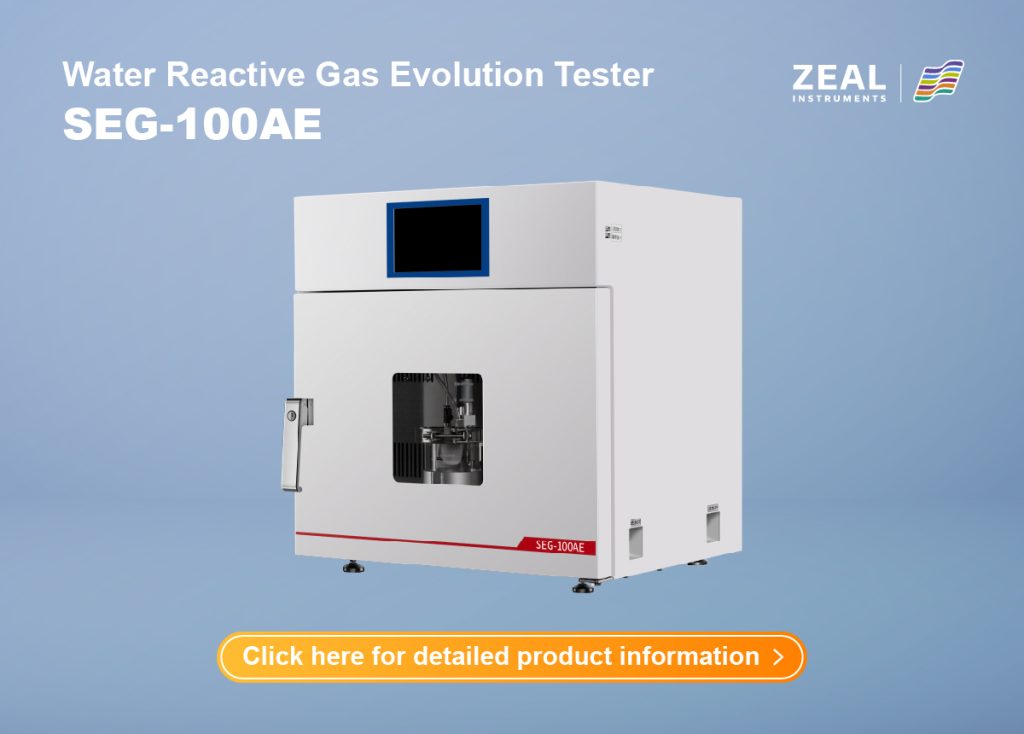
UN Test N.5 Apparatus for Division 4.3 Classification
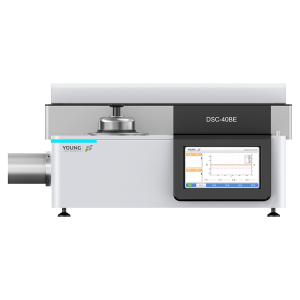
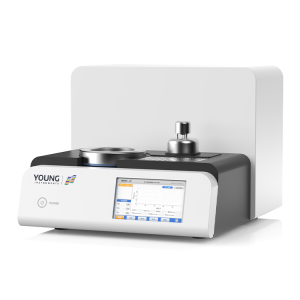
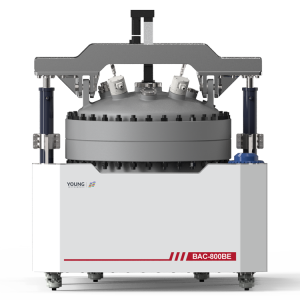
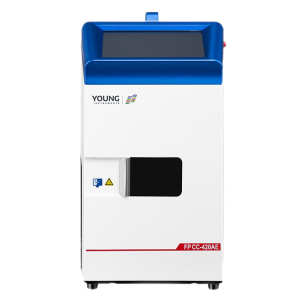
We provide a professional and reliable UN Test N.5 Apparatus, designed according to UN Test N.5 in the UN Manual of Tests and Criteria, Part III, sub-section 33.4.
The system integrates:
- Automatic water injection
- Constant temperature control
- Automatic gas collection
- Precise gas volume measurement
- Software-adjustable test conditions
- Gas release rate calculation
- Long-duration reaction monitoring
Compared with traditional manual devices, the apparatus reduces operation errors and safety risks while providing compliant, repeatable test data for Division 4.3 classification.
Technical Specifications
| Parameter | Specification |
|---|---|
| Operating Environment | -5–45°C, <95% RH |
| Test Chamber Temperature Control Range | 10–35°C, default 20°C, software-adjustable |
| Temperature Stability | ±0.5°C |
| Test Water Volume | 400 mL; automatic sample immersion |
| Sample Cup Volume | 20 mL |
| Gas Volume Measurement Accuracy | ±0.5 mL |
| Gas Collection Volume | 0–800 mL |
| Gas Detection Resolution | 0.01 mL |
| Gas Release Rate Range | 0–100 L/min/kg |
| Gas Volume Sampling Interval | 1 s |
| Gas Release Rate Calculation Interval | 1 min–1 h, software-adjustable |
| Timing Range | 0–240 h |
| Water Injection Volume | 300 mL |
| Water Injection Accuracy | ≤±1 mL |
| Pressure Measurement Range | -5–5 kPa |
| Pressure Measurement Accuracy | ±0.1% FS |
| Mass Measurement Range | 0–3100 g, optional |
| Mass Measurement Accuracy | ±0.01 g |
| Water Bath Temperature | 20±0.5°C, adjustable |
Application Scenarios and User Value
Chemical Manufacturers and Exporters
Products such as metal powders, carbides, organometallic compounds, anhydrous salts, and sulfides must be classified for Division 4.3 before export.
The UN Test N.5 Apparatus helps manufacturers determine at the factory inspection stage:
- Whether the product is a substance which emits flammable gas in contact with water
- Which Packing Group applies
- Whether the transport classification is accurate
- Whether dangerous goods documentation needs revision
This helps avoid transport document rework, customs detention, and shipment delays caused by classification errors.
Third-Party Testing Laboratories
When providing cargo transport condition identification reports or SDS preparation services, test data based on UN Test N.5 is a key technical foundation.
The automated workflow and standard-compliant design of the UN Test N.5 Apparatus help laboratories issue reports with stronger regulatory acceptance and reduce retesting caused by manual operation differences.
Dangerous Goods Logistics and Warehousing Companies
When receiving unknown chemicals or handling returned goods, logistics and warehousing companies need to quickly evaluate the risk of water-reactive flammable gas release.
The UN Test N.5 Apparatus supports rapid screening tests and helps warehouse operators prepare:
- Moisture prevention measures
- Segregation plans
- Emergency response procedures
- Safer storage strategies
Environmental Protection and Hazardous Waste Disposal Organizations
Water reactivity is also an important indicator in hazardous waste identification.
The apparatus can be used to assess gas release risks when waste materials come into contact with rainwater or landfill environments. This supports the development of safer waste treatment and disposal plans.
Conclusion
Division 4.3 classification is based on accurate quantitative measurement of gas evolution rate. The thresholds are clear:
- PG I: ≥10 L/kg·min or spontaneous ignition tendency
- PG II: ≥20 L/kg·h
- PG III: >1 L/kg·h
UN Test N.5 is specified in the UN Manual of Tests and Criteria, Part III, sub-section 33.4. Its screening test can quickly identify spontaneous ignition risks, while the gas evolution rate test is the core basis for Packing Group determination.
A professional UN Test N.5 Apparatus uses automatic water injection, constant temperature control, pressure-balanced gas collection, and standard-state conversion to reduce the operation errors and safety risks of traditional manual devices.
For chemical manufacturers, testing laboratories, logistics companies, and hazardous waste disposal organizations, the UN Test N.5 Apparatus provides reliable and repeatable data for Division 4.3 classification, Packing Group determination, SDS preparation, and dangerous goods transport compliance.


