





















Electrolyte Thermal Stability Testing for Formulation and Material Compatibility

Electrolytes can look stable at room temperature and still become reactive when heat, pressure, impurities, or a new electrode and separator combination is introduced. Electrolyte thermal stability testing gives development teams an evidence-based way to find those risks early, compare formulations, and define safer operating limits before a product reaches pilot or full-scale production.
For lithium-ion batteries, energy-storage systems, specialty chemicals, and advanced materials, the useful question is not simply “What is the decomposition temperature?” A stronger assessment asks: What event occurs first, how much heat is released, what materials accelerate it, and what happens under realistic pressure and atmosphere?
What electrolyte thermal stability testing should reveal
A well-designed test program can help establish:
- the temperature at which an exothermic or endothermic event begins;
- the size and rate of heat release;
- whether the event changes with inert, oxidative, or reactive atmosphere;
- how pressure and confinement alter the observed behavior;
- whether the electrolyte reacts with an electrode, separator, current collector, coating, or seal;
- which formulation or process variable creates the largest safety margin.
These outputs are screening and design inputs. They should be combined with compatibility, aging, abuse, and scale-up evidence rather than treated as a single pass/fail number. ASTM E537 describes thermal stability testing of chemicals by differential scanning calorimetry and emphasizes the value of detecting enthalpic changes, estimating event temperature and heat, and observing atmosphere and pressure effects.
Why formulation and compatibility must be tested together
An electrolyte is a system, not an isolated bottle of solvent and salt. A formulation that is quiet in a clean glass vial may behave differently when it contacts a high-surface-area electrode, a catalytic impurity, a binder, a separator coating, or a metal component. Surface area, moisture, salt concentration, additive chemistry, state of charge, and previous thermal history can all influence the result.
That is why compatibility testing should compare more than one sample type:
| Sample set | What it helps answer | Typical decision |
|---|---|---|
| Electrolyte alone | Baseline thermal events and heat release | Initial formulation screen |
| Electrolyte plus electrode material | Interfacial or catalytic reaction risk | Material pairing and additive selection |
| Electrolyte plus separator or coating | Compatibility, wetting, and degradation behavior | Separator/coating qualification |
| Electrolyte plus representative cell components | Combined reaction pathway under realistic conditions | Prototype and scale-up risk review |
Core methods and when to use them
Differential scanning calorimetry
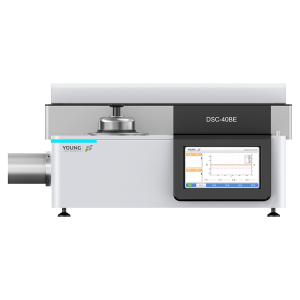
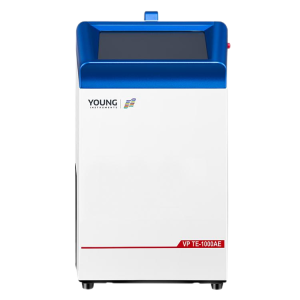
DSC measures heat flow as a sample is heated through a controlled program. It is efficient for comparing formulations, identifying transitions, and screening onset temperatures with small sample quantities. A DSC testing machine can therefore be a strong first-line tool for formulation development, provided the sample pan, heating rate, atmosphere, and mass are documented and kept comparable.
Pressure DSC
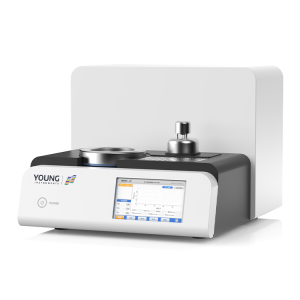
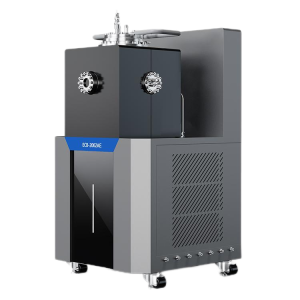
Pressure DSC can help evaluate volatile or gas-forming systems under a controlled pressure. Pressure may shift reaction kinetics and change the apparent onset, so pressure DSC is useful when the real application includes sealed cells, pressure vessels, or restricted venting. Results should be reported with the pressure, gas composition, pan type, and calibration details.
Thermogravimetric analysis
TGA tracks mass change during a temperature program. It can show evaporation, volatilization, residue formation, and decomposition stages that complement DSC heat-flow data. TGA alone does not describe the complete hazard; pairing it with DSC or evolved-gas analysis produces a more useful picture of what is leaving the sample and when heat is generated.
Accelerating rate calorimetry and larger-scale confirmation
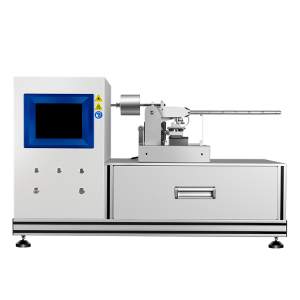
When screening indicates a meaningful exotherm, calorimetry at a slower or near-adiabatic condition can help estimate self-heating behavior, pressure generation, and scale-up consequences. Teams working on runaway reaction questions can also review the site’s thermal hazards tester and related runaway reaction guidance as part of a broader safety program.
A practical test plan for formulation teams
- Define the decision. Decide whether the test supports solvent selection, additive screening, a material change, storage qualification, or process scale-up.
- Build representative samples. Record electrolyte composition, water content, salt concentration, additive age, electrode loading, separator type, and sample conditioning.
- Screen the neat formulation. Use consistent sample mass, heating rate, atmosphere, and pan configuration to establish a baseline.
- Test material combinations. Add the electrode, separator, coating, or metal component most representative of the application. Include a control wherever possible.
- Challenge the boundaries. If the product may see pressure, oxygen, overcharge, hot storage, or contamination, design a controlled test condition that reflects that risk.
- Confirm the important event. Repeat key results and use complementary calorimetry or analytical methods before making a scale-up decision.
- Translate data into controls. Convert onset and heat-release information into storage limits, operating windows, cooling requirements, material specifications, and emergency response inputs.
How to interpret the results without overreaching
The first visible exotherm is important, but it is not automatically the maximum safe operating temperature. Instrument resolution, heating rate, sample mass, vessel geometry, pressure, and baseline treatment can affect the apparent onset. Two laboratories may obtain different values if their methods are not harmonized.
Look for trends rather than a single attractive number:
- Does the formulation maintain a wider onset margin after aging?
- Does an additive reduce heat release or simply move the event to a higher temperature?
- Does the electrolyte become more reactive with a specific electrode or coating?
- Does pressure create a new event or accelerate an existing one?
- Are repeated runs consistent enough to support a specification?
For battery programs, thermal data can be connected to the broader cell thermal runaway testing workflow. For chemical plants, the same logic supports a documented thermal hazard review and safe operating envelope.
Common mistakes that weaken the data
- Testing only the neat electrolyte while ignoring contact with active materials;
- changing heating rate or sample mass between formulations without recording it;
- using a sample that has absorbed moisture or lost volatile components during preparation;
- reporting onset temperature without the atmosphere, pressure, pan, or method details;
- treating a small-sample DSC result as a direct prediction of full-cell or vessel behavior;
- stopping after a pass/fail screen instead of feeding the findings into design and process controls.
FAQ
Is DSC enough to qualify an electrolyte?
DSC is highly useful for screening and comparison, but qualification normally requires complementary evidence. Depending on the application, that may include TGA, evolved-gas analysis, pressure testing, aging, compatibility studies, and larger-scale calorimetry.
Should the test use inert or reactive gas?
Use the atmosphere that answers the development question. Inert gas can isolate intrinsic thermal behavior, while a reactive or oxidative atmosphere may reveal conditions that are relevant to the real application. Always document the choice.
How can the results support a material change?
Use the same method to compare the current and proposed materials, then review onset, heat release, pressure response, repeatability, and downstream control implications. A small formulation improvement is valuable only when it remains compatible with the complete product system.
Conclusion
Electrolyte thermal stability testing turns an uncertain formulation risk into measurable development data. By combining DSC or pressure DSC screening with representative compatibility samples, complementary mass-loss information, and scale-up confirmation, teams can select materials with greater confidence and define safer operating limits earlier.
Need help selecting a thermal analysis or calorimetry solution? Explore Zeal Instruments’ thermal testing products or contact the technical team to discuss your sample, temperature range, pressure condition, and decision objective.


