





















Using Dust Testing Data for Process Safety Management Decisions
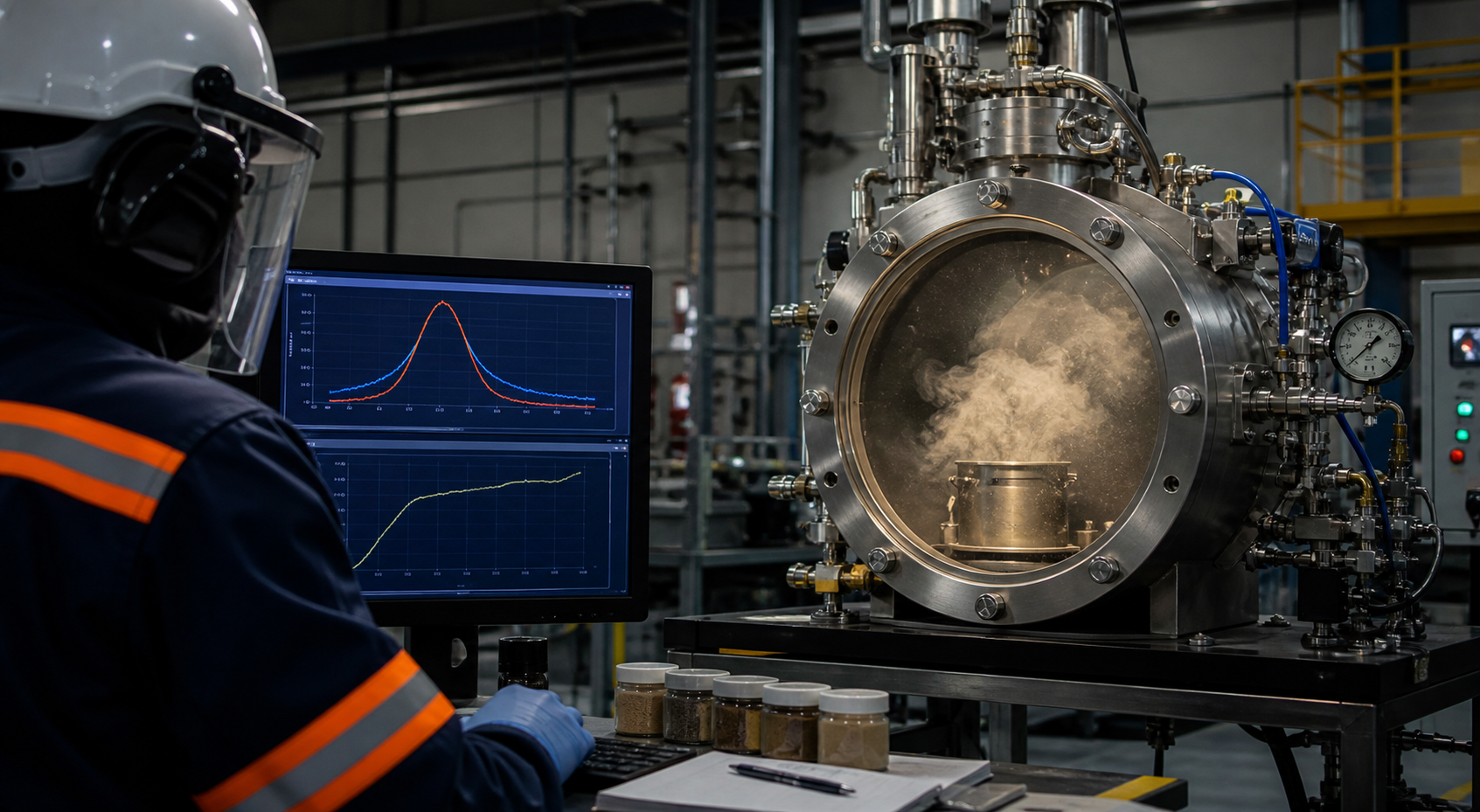
Combustible dust risk is not controlled by a single number. A powder may be easy to ignite but produce limited pressure, or require a strong ignition source while creating a severe deflagration once dispersed. The role of dust testing data in process safety management is to connect those different behaviors with specific decisions about equipment, operating conditions, housekeeping, maintenance, training, and emergency response.
OSHA notes that scientifically validated test data for the actual material is strong evidence when determining whether a dust presents a combustible dust hazard. The agency’s Combustible Dust Hazard Communication Guidance also emphasizes controlling dust, eliminating ignition sources, and limiting explosion effects. The practical challenge is turning a laboratory report into actions that people can verify in the field.
Start with the process safety question
Before commissioning a test, define the decision it must support. Useful questions include:
- Can this powder form an explosible cloud in the process?
- What ignition sources must be prevented or controlled?
- What pressure could an enclosure experience during a deflagration?
- Do dust collectors, dryers, mills, silos, or conveying lines need venting or suppression?
- Will a new supplier, particle-size distribution, moisture level, or process step change the hazard?
- What data must be carried into a PHA, HAZOP, DHA, management-of-change review, or operating procedure?
This approach prevents data collection from becoming a checklist exercise. The result should be a decision register: each measured parameter, the hazard it describes, the process location it affects, the control it triggers, and the owner responsible for verification.
What the Main Dust Parameters Mean for Process Safety Decisions
| Parameter | What it describes | Typical process safety use |
|---|---|---|
| MIE | Minimum ignition energy of a dispersed dust cloud under the test conditions | Static control, electrical classification, ignition-source review, and hot-work precautions |
| MIT cloud | Minimum ignition temperature of a dust cloud | Maximum surface temperature, dryer and heater safeguards, and hot-particle control |
| MEC | Minimum explosible concentration of a dust cloud | Housekeeping targets, concentration control, and enclosure and ventilation review |
| Kst | Normalized rate of pressure rise for a dust deflagration | Explosion venting, isolation, suppression, and equipment pressure design |
| Pmax | Maximum explosion pressure measured in the test vessel | Containment, relief sizing, structural design, and consequence assessment |
| LOC | Limiting oxidant concentration below which combustion is not supported under the test conditions | Inerting strategy, oxygen monitoring, and interlock design |
| Layer ignition data | Ignition behavior of settled dust layers | Surface temperature limits, housekeeping frequency, and accumulation controls |
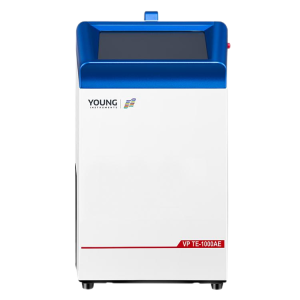
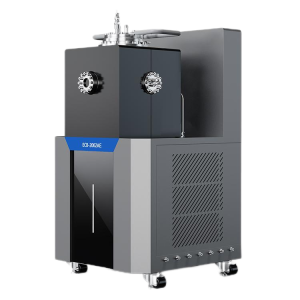
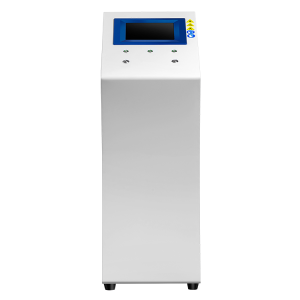
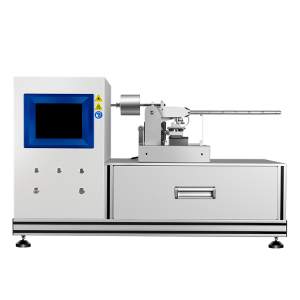
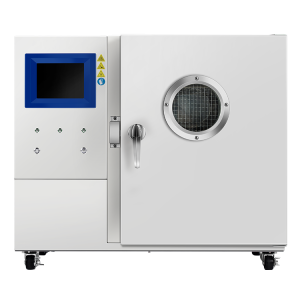
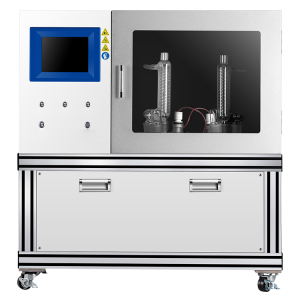
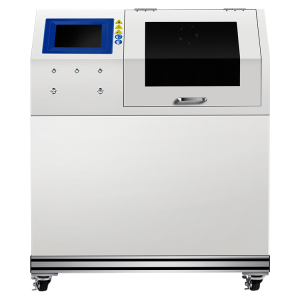
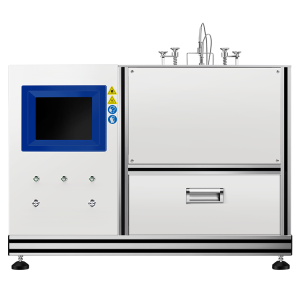
For a broader combustible-dust characterization program, the ECD-20AE 20 L Spherical Explosion Tester and MIE-3000AE Dust Cloud Minimum Ignition Energy Tester can serve as core instruments for evaluating Pmax, Kst, MEC, LOC, and MIE. Where cloud ignition temperature is also required, the MITC-1000AE Dust Cloud Minimum Ignition Temperature Tester can be added to characterize MIT.
These values are not interchangeable. A low MIE does not calculate Kst, and a Kst class does not replace a review of settled layers, hybrid mixtures, or ignition sources. Teams can review the site’s combustible dust testing overview and 20 L sphere testing guide for additional context.
What the main dust parameters mean for decisions
| Parameter | What it describes | Typical process safety use |
|---|---|---|
| MIE | Minimum ignition energy of a dispersed dust cloud under the test conditions | Static control, electrical classification, ignition-source review, hot-work precautions |
| MIT cloud | Minimum ignition temperature of a dust cloud | Maximum surface temperature, dryer and heater safeguards, hot-particle control |
| MEC | Minimum explosible concentration of a dust cloud | Housekeeping targets, concentration control, enclosure and ventilation review |
| Kst | Normalized rate of pressure rise for a dust deflagration | Explosion venting, isolation, suppression, and equipment pressure design |
| Pmax | Maximum explosion pressure measured in the test vessel | Containment, relief sizing, structural design, and consequence assessment |
| LOC | Limiting oxidant concentration below which combustion is not supported under the test conditions | Inerting strategy, oxygen monitoring, and interlock design |
| Layer ignition data | Ignition behavior of settled dust layers | Surface temperature limits, housekeeping frequency, and accumulation controls |
For a broader combustible-dust characterization program, the ECD-20AE 20 L Spherical Explosion Tester and MIE-3000AE Dust Cloud Minimum Ignition Energy Tester can serve as core instruments for evaluating Pmax, Kst, MEC, LOC, and MIE. Where cloud ignition temperature is also required, the MITC-1000AE Dust Cloud Minimum Ignition Temperature Tester can be added to characterize MIT.
These values are not interchangeable. A low MIE does not calculate Kst, and a Kst class does not replace a review of settled layers, hybrid mixtures, or ignition sources. Teams can review the site’s combustible dust testing overview and 20 L sphere testing guide for additional context.
How to move from data to PSM actions
1. Update the hazard analysis
Place the test report beside the process flow diagram, equipment list, and dust collection layout. Mark where the dust is generated, conveyed, dried, milled, stored, or discharged. For each location, record the credible cloud, layer, and ignition scenarios. A Dust Hazards Analysis (DHA) can organize these scenarios and identify gaps in existing safeguards.
2. Define operating limits
Use the test results to establish limits for temperature, oxygen concentration, dust concentration, pressure, moisture, airflow, and accumulation. The limit should be written in a form operators can observe or the control system can alarm on. Avoid copying a laboratory value directly into a procedure without applying an engineering margin and confirming the test’s representativeness.
3. Design and verify engineering controls
Kst and Pmax may influence venting, suppression, isolation, and containment decisions, while MIE and MIT guide ignition-source control. The equipment review should include dust collectors, filters, bucket elevators, mills, dryers, mixers, silos, ducts, and transfer points. Ask whether a primary event could disturb accumulated dust and create a more severe secondary event; OSHA’s Combustible Dust National Emphasis Program describes this escalation pathway.
4. Feed management of change
A new supplier or a change in particle size can change explosibility. So can drying temperature, milling energy, moisture, additives, coating, or recycle content. Make dust re-testing a defined MOC trigger when a change could alter particle size, composition, temperature, concentration, or ignition behavior. Link the MOC to updated SDS information, PHA documentation, equipment settings, and training.
5. Improve procedures and housekeeping
Test data should make housekeeping measurable. Instead of saying “keep the area clean,” define where dust may accumulate, how it is inspected, what thickness or condition triggers cleaning, which vacuum or cleaning method is permitted, and how findings are recorded. Layer ignition information can support surface-temperature limits and inspection priorities. The procedure should also address hidden ledges, overhead spaces, cable trays, and dust collector compartments.
6. Strengthen training and emergency planning
Operators, maintenance teams, and contractors should understand the specific dust hazard, prohibited ignition sources, alarm response, isolation points, and housekeeping expectations. Emergency plans should reflect credible scenarios, including a fire, a dust collector incident, loss of inerting, a blocked vent, or a deflagration that propagates through connected equipment.
Check data quality before making a high-consequence decision
Representative sampling is as important as the test method. Keep a chain of custody and record particle-size distribution, moisture, temperature history, composition, additives, age, and storage conditions. If a powder is hygroscopic or changes during transport, a result from a dried or aged sample may not represent the process.
Also review:
- the test vessel and method used;
- sample preparation and dispersion conditions;
- igniter energy and ignition location;
- number of replicates and repeatability;
- whether the result applies to a cloud, layer, or hybrid mixture;
- the engineering margin used when converting the result into a control limit.
The minimum ignition energy testing method is especially useful for ignition-source reviews, but MIE should be interpreted with dispersion, moisture, particle size, and equipment conditions in mind.
A simple decision matrix
| Finding | Decision to trigger | Evidence of closure |
|---|---|---|
| Explosible cloud confirmed | Complete DHA and identify explosion prevention/mitigation measures | Approved DHA, equipment drawings, action register |
| Low MIE or low MIT | Review static, hot-surface, electrical, and mechanical ignition controls | Updated inspection and ignition-source checklist |
| Significant Kst/Pmax | Verify venting, isolation, suppression, and structural assumptions | Design calculations, certificates, functional test records |
| Layer ignition concern | Set surface-temperature and housekeeping controls | Inspection records, cleaning schedule, alarm limits |
| Material or process change | Open MOC and confirm whether re-testing is required | Signed MOC, revised procedures, retraining record |
Common gaps in dust testing programs
- testing a generic material instead of the actual process powder;
- using one sample to represent several grades, suppliers, and moisture conditions;
- placing results in a report archive without assigning actions and owners;
- using Kst and Pmax for equipment design while ignoring MIE, MIT, layers, or propagation;
- failing to re-test after milling, drying, coating, or particle-size changes;
- treating housekeeping as a visual preference instead of a verified process control.
FAQ
Which dust test should be performed first?
Start with the decision and the process scenario. A basic screening sequence often includes explosibility, MIE, MIT, and pressure-rise testing, followed by MEC, LOC, layer ignition, resistivity, or specialized tests when the process requires them.
Can an SDS replace dust testing?
An SDS is an important information source, but it may not contain data for the actual grade, particle-size distribution, or process condition. When the consequence is significant, representative laboratory testing gives the PSM team stronger evidence.
How often should dust be re-tested?
Re-test when composition, supplier, particle size, moisture, drying or milling conditions, additives, or process equipment changes could affect hazard behavior. Establish the trigger in the MOC procedure and review it during periodic hazard analysis.
Conclusion
Dust testing data creates value when it changes what the facility designs, monitors, maintains, and trains. By translating MIE, MIT, MEC, Kst, Pmax, LOC, and layer ignition results into clear PSM actions, organizations can build a more defensible combustible dust risk program and close the gap between laboratory evidence and daily operation.
Explore Zeal Instruments’ dust and thermal safety testing products or contact the technical team to discuss representative sampling, test selection, and data packages for your process.


